Manual PET Strapping Kit: Tight Loads Without Power
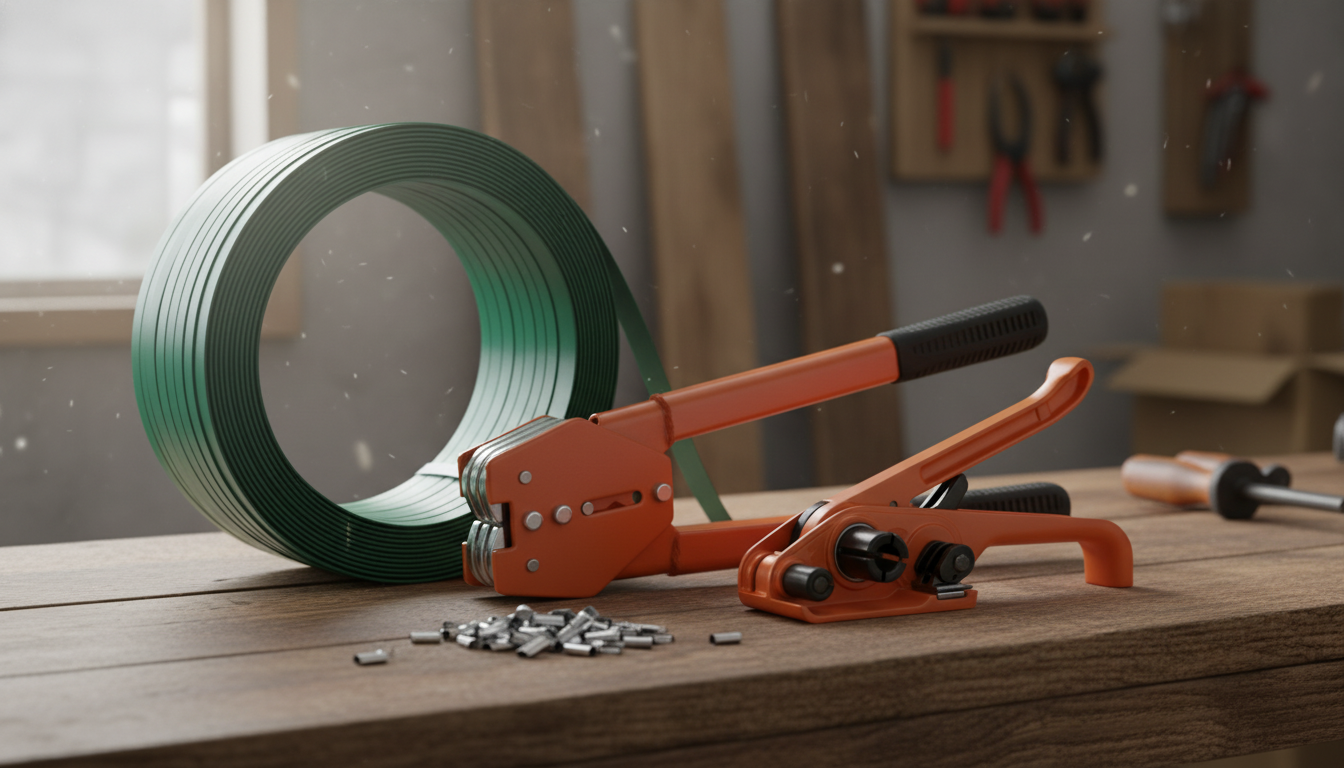
Manual PET Strapping That Keeps Loads Tight—Without Power or Air
When cartons start to bulge, bundles want to roll, or pallet loads shift in transit, a dependable strap loop can be the difference between a clean delivery and a messy claim. A manual plastic strapping and banding kit is built for exactly that: securing cartons, long items, and palletized goods using hand-powered tension—no compressor, battery, or electrical outlet required.
This guide explains what a manual PET strapping kit does best, what parts matter most, and how to strap consistently and safely for storage, handling, and shipment.
What This Kit Is Designed to Do
- Tighten and lock PET strapping around boxes, lumber, pipes, appliance cartons, and palletized goods.
- Reduce load shifting during handling, truck transit, or warehouse stacking.
- Provide a portable, manual alternative to powered strapping tools for small-to-medium throughput.
- Support common packing workflows: staging, pallet build-out, outbound shipping, and returns re-bundling.
Manual strapping is especially useful when you need repeatable tension at different stations (dock, storage area, retail back room) and don’t want downtime caused by charging batteries or maintaining air lines.
What’s Included and How Each Part Works
A basic manual PET strapping setup relies on a simple sequence: wrap, tension, seal, and cut. Each component has a specific role in maintaining tension after the tool is removed.
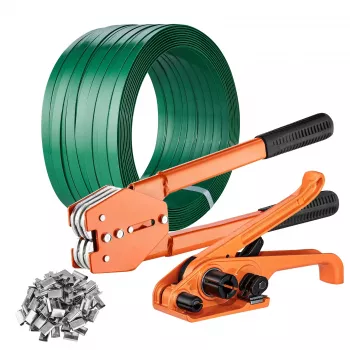
- Manual tensioner: pulls PET strap tight with controlled leverage to remove slack around the load.
- Seals (metal crimps): secure the overlapped strap ends after tensioning to prevent back-slip.
- PET strap: durable plastic strapping suited for many shipping and bundling tasks where steel strap is unnecessary.
- System flow: thread strap, tension, crimp seal, then cut—creating a stable loop around the package.
| Component | Purpose | What to check before use |
|---|---|---|
| Tensioner tool | Applies tension to remove slack and tighten the loop | Smooth handle movement; gripper teeth clean; no cracks or bent parts |
| PET strapping | Wraps and holds the load together | Correct width/thickness; no tears, kinks, or severe creases |
| Metal seals | Locks the overlap so tension remains | Seal size matches strap; no deformation or corrosion |
| Cutting step (tool-integrated or separate) | Removes excess strap safely after sealing | Blade condition; clear cutting path away from hands and face |
When Manual PET Strapping Makes Sense
- Low-to-moderate daily strapping volume: when a powered tool isn’t cost-effective.
- Portability: loading docks, job sites, storage units, pop-up shipping stations, or mobile repair teams.
- Mixed package sizes: strap placement can change quickly (single strap, double strap, cross-strap).
- Typical use cases: reinforcing cartons, bundling long items, stabilizing irregular loads, quick pallet rework.
For shippers aligning their packaging with common test methods and handling realities, it helps to understand how vibration and impact can loosen unsecured loads. Resources like the International Safe Transit Association (ISTA) provide an overview of transit testing that highlights why consistent unitization matters.
How to Strap a Box or Bundle (Step-by-Step)
- Wrap: Place PET strap around the package and overlap the strap ends with enough tail for the tensioner and seal.
- Thread: Feed the strap into the tensioner following the tool’s strap path so the gripper can bite properly.
- Tension: Pump or lever the handle to tighten until the strap is snug and the load feels stable (avoid crushing cartons).
- Seal: Slide a metal seal over the overlapped strap and crimp firmly so the seal locks the strap without slipping.
- Cut: Remove excess strap after the seal is set; keep the cut end controlled to prevent snap-back.
- Check: Push/pull the load gently; if the strap shifts, re-tension and re-seal with a fresh seal.
If the package will be frequently handled (multiple touches, conveyor transitions, or mixed stacking), consider pairing strapping with other unitization methods. Overviews like Packaging School’s fundamentals can be helpful for understanding how materials work together in real shipping environments.
Choosing Strap Tension and Strap Placement
- Match tension to the load: tighter for rigid bundles (wood/pipe), lighter for cartons that can crush.
- Use edge protection: for sharp corners or delicate packaging to prevent strap cuts and carton damage.
- Placement patterns: single strap for light stabilization; two parallel straps for longer cartons; cross-strap for loads that may twist.
- For pallets: strap to keep the load tight to the pallet footprint; combine with stretch wrap when needed for dust protection and unitization.
- Avoid over-tensioning: excessive force can deform boxes, damage product, or cause seal failure.
Safety and Handling Tips
For general jobsite material handling expectations, consult OSHA’s materials handling guidance and apply best practices for cutting hazards and stored-energy risks.
Common Issues and Quick Fixes
Maintenance and Storage for Longer Tool Life
Featured Products
- Manual Plastic Strapping & Banding Kit with Tensioner, PET Strap & Seals
- Timberland Men’s Brown Leather Boots
- Zen-Savvy Savings Checklist: The Japanese Way to Build Wealth with Calm and Clarity
FAQ
What’s the difference between PET strapping and steel strapping?
PET strapping is a strong, lightweight plastic option that’s easier to handle and typically safer for many bundling and shipping tasks, while steel strapping is chosen for extremely heavy loads, high-heat environments, or very sharp edges. Steel can offer higher ultimate strength, but it usually adds cost and increases handling risk.
Do the seals have to match the strap width?
Yes. The seal size must match the strap width (and intended thickness range) so the crimp bites correctly and holds tension. A mismatched seal can deform, slip, or fail under load.
How tight should the strap be on a cardboard box?
It should be snug enough to prevent shifting without crushing or denting the carton. If the box needs more restraint, add corner protectors or a second strap rather than increasing tension until the carton deforms.















Leave a comment