Large Kids Toy Organizer: Bins, Cubbies & Cabinets
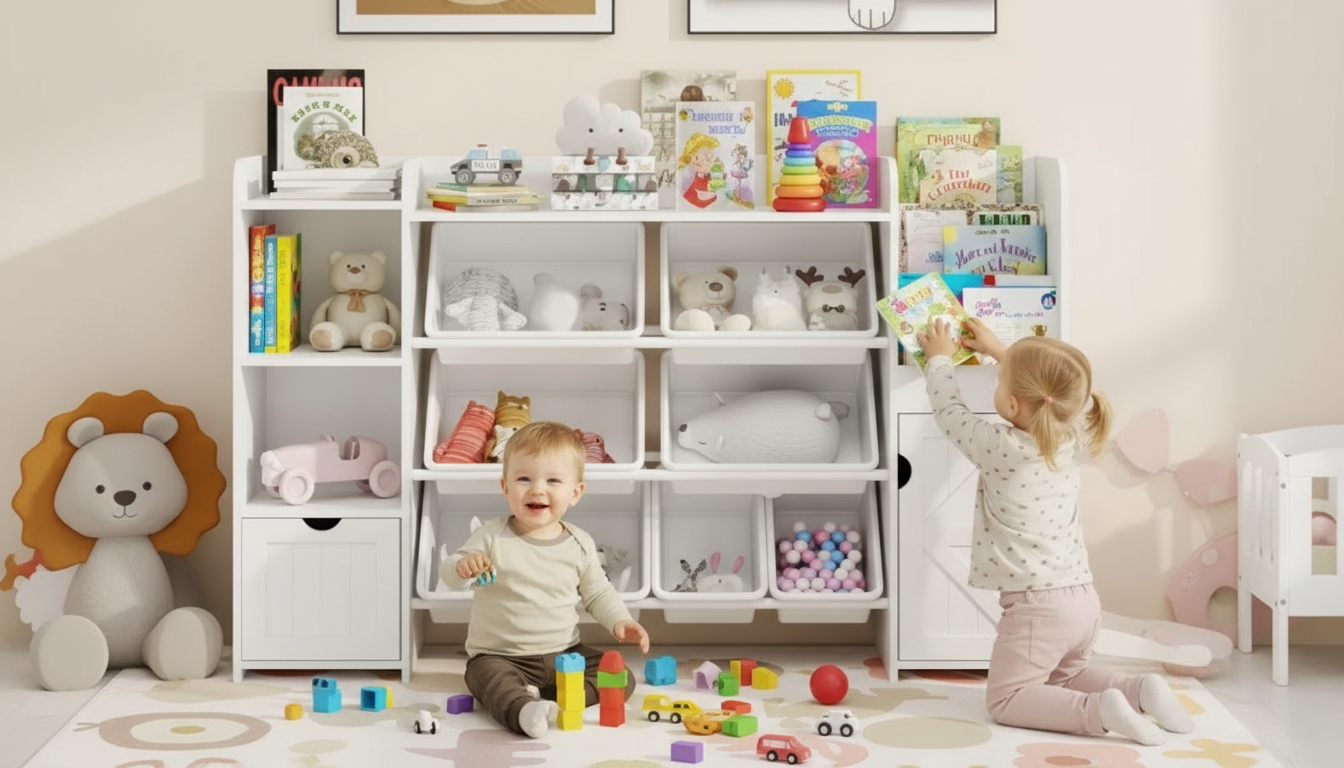
Large Kids Toy Organizer with Storage Bins, Bookshelf Cubbies & Cabinets
A well-planned toy organizer can make cleanup faster, protect favorite items, and keep books and play supplies visible without turning the room into clutter. A mixed-storage unit—bins for quick drop-in sorting, open cubbies for daily favorites, and closed cabinets for overflow—supports a simple “play, reset, repeat” routine that kids can follow.
Why a mixed-storage organizer works better than one-style storage
Single-style storage is easy to shop for, but it often breaks down in real life: kids need speed, parents need flexibility, and different toys simply behave differently. A mixed unit handles the daily chaos without requiring a perfect system.
- Bins encourage fast cleanup: toss-in sorting for blocks, dolls, cars, and mixed sets—especially when time is short.
- Bookshelf cubbies keep titles within reach: visible covers/spines make reading easier to start and easier to tidy back up.
- Cabinets hide visual clutter: stash rotated toys, messy kits, or items meant for supervised play so the room still feels calm.
- Open + closed storage supports a predictable routine: “open shelves for daily, closed doors for later” is simple enough for kids to remember.
Quick tour of the storage zones: bins, cubbies, and cabinets
Instead of asking kids to make lots of tiny decisions, assign one clear rule to each zone. Fewer rules lead to more follow-through.
- Storage bins: best for categories that change often (building toys, dress-up accessories, plushies). If it’s hard to stack neatly, it probably belongs in a bin.
- Open cubbies/shelves: best for items used daily and easier to “park” neatly (puzzles, board games, picture books).
- Cabinets with doors: best for art supplies, sensory materials, tiny pieces, or anything that needs a clear “not right now” boundary.
- One rule per zone: for younger kids, “Books here, toys in bins, messy/tiny behind doors” is plenty.
Room layout ideas that make cleanup almost automatic
Even the best organizer won’t help if it’s inconvenient. Layout is the silent helper that makes “put it away” feel doable.
- Put the organizer near the primary play area: if cleanup requires crossing the room, toys tend to stay out.
- Keep the most-used bins at kid height: reserve higher spaces for adult-only items or rotation storage.
- Add a “landing strip” bin: an end-of-day speed bin catches everything unsorted; reset it weekly so it doesn’t become a black hole.
- Create a book corner: position a small rug or cushion next to the bookshelf side to anchor reading time and contain book sprawl.
Suggested sorting system by toy type (simple labels, fewer categories)
A good sorting system fits how kids actually think: broad buckets, clear labels, and a place for the odd pieces that don’t belong anywhere else.
| Item type | Best zone | Why it works | Extra tip |
|---|---|---|---|
| Building blocks | Bins | Fast drop-in sorting | Use one “mixed blocks” bin unless sets must stay separate |
| Picture books | Bookshelf cubbies | Easy to grab and return | Face-out a few favorites; rotate weekly |
| Puzzles & board games | Open cubbies | Flat storage prevents bent boxes | Stand larger boxes vertically like books |
| Art supplies | Cabinets | Reduces spills and keeps items supervised | Use a small caddy inside for crayons/markers |
| Pretend play & costumes | Bins or cabinets | Large items compress well in bins | Add a hook nearby for dress-up favorites |
| Tiny pieces (minifigs, beads) | Cabinets | Prevents choking hazards and loss | Store in lidded boxes labeled by set |
Safety and durability checkpoints for kids’ storage furniture
- Anchor tall or heavy units: wall anchoring reduces tip-over risk, especially in active playrooms. See the CPSC furniture tip-over prevention guidance.
- Prioritize stability and smooth edges: choose a solid base and avoid wobbly organizers in high-traffic paths.
- Use cabinets for small items with younger siblings: keep choking hazards out of reach; the American Academy of Pediatrics choking prevention policy is a helpful reference.
- Pick wipeable surfaces: high-use zones should clean easily, while messy materials (slime, paint) live behind doors when not in use.
Daily reset routine: a 5-minute cleanup plan kids can follow
Product option: a large organizer that combines bins, bookshelf cubbies, and cabinets
Large Kids Toy Organizer with Storage Bins, Bookshelf Cubbies & Cabinets is built for “everything has a home” organization: assign each child a bin row/color and reserve a cabinet shelf for personal or delicate items.
More in-stock picks from the shop
- Beige Travertine U-Shape Sculpture – Modern Stone Decor for Home Interiors (an easy way to style an adult shelf above the play zone while keeping kid surfaces clear).
- Lightweight 3L Cycling Backpack for Running, Hiking & Outdoor Sports (handy for packing small toys, snacks, or wipes for park days and playdates).
- Canon 5D Mark III/IV 24-105mm DSLR Camera Underwater Housing (for capturing family trips—store accessories safely away from kid areas).
FAQ
How many bins are ideal for a kids’ toy organizer?
A practical range is usually 6–10 bins, depending on age and toy volume. Fewer, broader categories make it easier for kids to succeed without overthinking where each item goes.
Should books go in cubbies or behind cabinet doors?
Open cubbies are best for everyday books because kids can see choices and return them quickly. Cabinet doors work well for overflow, special books, or paper items you want protected from tearing and spills.
Do toy organizers need to be anchored to the wall?
Anchoring is a strong safety upgrade for tall or heavy furniture because it reduces tip-over risk. It’s especially important in nurseries and playrooms, and anywhere toddlers might climb or pull up on furniture.










Leave a comment