Automatic Burr Mill Grinder: Espresso to Drip Consistency
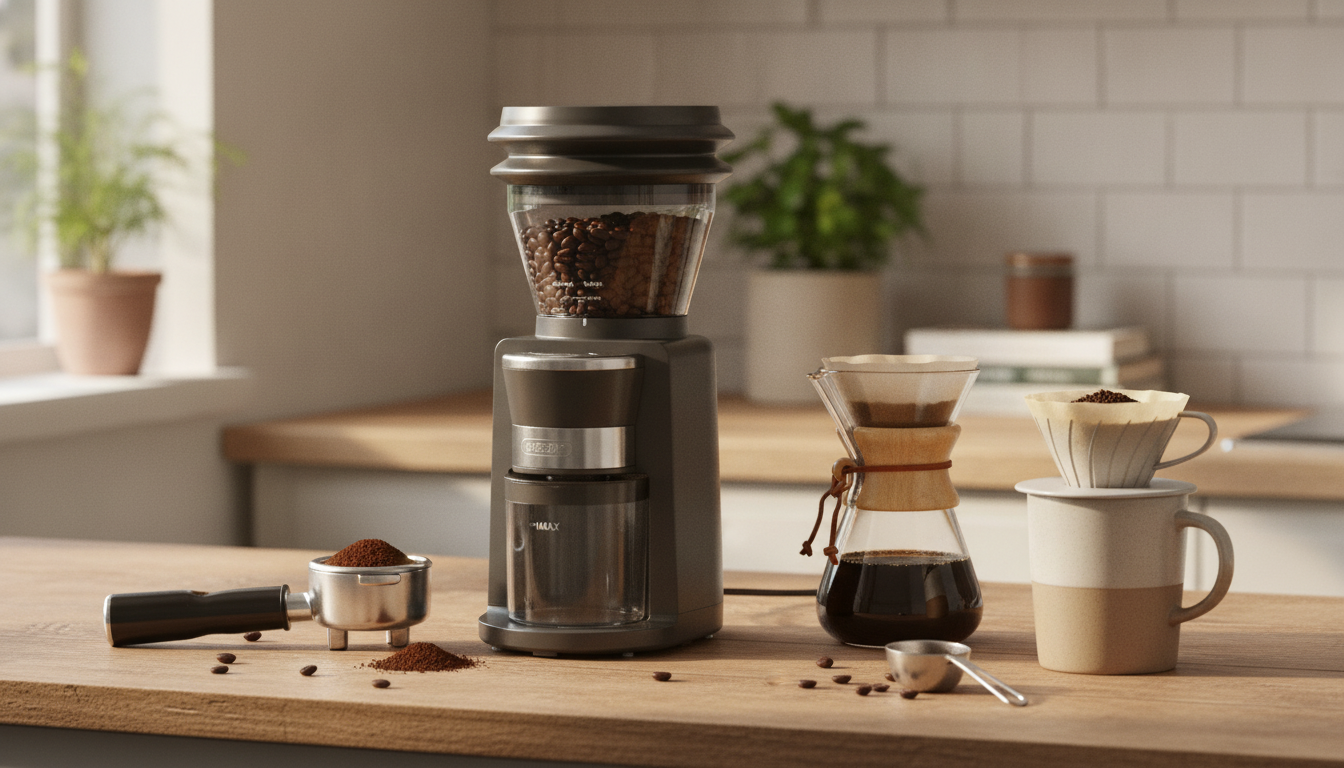
Automatic Burr Mill Electric Coffee Grinder for Espresso, Pour Over & Drip Coffee
Fresh grinding is one of the biggest upgrades for espresso and filter brews, but consistency matters as much as freshness. A burr mill grinder aims to deliver even particles, repeatable settings, and a workflow that fits everyday brewing—whether dialing in espresso or switching to pour over and drip.
What a Burr Mill Grinder Changes in the Cup
A burr mill doesn’t “improve” coffee by magic—it improves the uniformity of the grind. That uniformity is what makes your recipes behave the same way from cup to cup.
- More even particle size helps reduce harsh bitterness (from fines) and sour under-extraction (from boulders).
- More predictable flow for espresso and more stable brew times for pour over and drip.
- Helps make small recipe tweaks (dose, yield, time) easier to interpret because the grind is less variable.
If you’ve ever adjusted your espresso one notch finer and the shot suddenly choked—or you changed nothing and your pour over drew down a full minute slower—particle distribution is often the hidden culprit. Burr milling is designed to narrow that distribution so extraction changes are easier to control.
Designed for Espresso, Pour Over, and Drip: What to Look For
Not every grinder that says “espresso” handles filter coffee well, and not every “drip grinder” can go fine enough for real espresso. A practical all-around burr mill should make switching styles feel routine rather than risky.
- Grind range: steps fine enough for espresso and coarse enough for typical drip baskets and cone brewers.
- Adjustment control: clearly marked settings to return to a known point after switching brew methods.
- Retention management: less leftover coffee in the grind path helps keep flavors clean when changing beans or settings.
- Static and clumping: consistent grounds distribution supports even extraction—especially important for espresso puck prep.
For a quick reality check: espresso tends to punish small inconsistencies (channeling, uneven density, clumps), while pour over and drip tend to punish slow drawdowns and muddy fines. A capable burr grinder is essentially a consistency tool for every method.
Quick Grind Guide by Brew Method
Use the table as a starting point; exact settings vary by bean density, roast level, humidity, and machine. When changing grind size, adjust one variable at a time (grind first, then dose, then ratio). For espresso, prioritize taste and shot time together; for pour over/drip, prioritize brew time and clarity.
| Brew method | Target texture | Typical brew time | Dial-in cue |
|---|---|---|---|
| Espresso | Fine (like table salt, slightly finer) | 25–35 seconds (typical range) | Too fast/sour: finer. Too slow/bitter: coarser. |
| Pour over (V60, cone brewers) | Medium-fine (like sand) | 2:30–4:00 | Drawdown stalls: coarser. Thin/weak: finer or higher dose. |
| Drip coffee maker | Medium (like coarse sand) | 4:00–6:00 (machine-dependent) | Bitter/flat: coarser. Sour/underdeveloped: finer. |
| French press (optional use case) | Coarse (like kosher salt) | 4:00 steep | Muddy cup: coarser and pour gently. |
For deeper technique references, the Specialty Coffee Association (SCA) and the National Coffee Association (NCA) publish practical brewing guidance that pairs well with a disciplined grind-and-weigh routine.
Everyday Workflow Tips for Better Results
Once a grinder can hit the right range, daily habits become the difference between “good” and “consistently great.” Small process wins add up fast.
- Weigh beans before grinding for repeatability; keep notes on setting + dose for each coffee.
- For espresso: distribute and tamp consistently; uneven puck prep can mimic a “wrong grind” problem.
- For pour over/drip: keep the kettle and filter routine consistent so grind changes are easier to judge.
- Purge after major changes: purge a small amount after big grind adjustments if the grinder tends to hold onto grounds from the previous setting.
A simple approach when switching from espresso to filter: change the setting, run a short purge, then brew and evaluate. When switching back, return to your saved espresso mark and do the same. That small habit can keep flavors cleaner and reduce “mystery shots.”
Cleaning and Maintenance for Flavor Clarity
Grinders don’t just move coffee—they also collect oils and microscopic fines. Over time, that buildup can blur flavors and make adjustments feel less responsive.
Product Spotlight: Automatic Burr Mill Electric Coffee Grinder
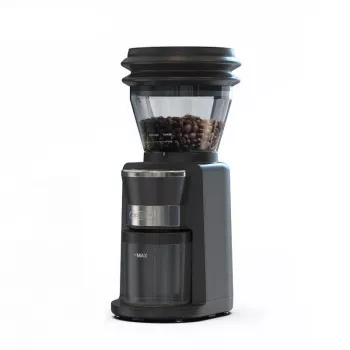
The Automatic Burr Mill Electric Coffee Grinder for Espresso, Pour Over & Drip Coffee is built to cover espresso-through-drip grinding with burr milling for more consistent particle size. Automatic electric operation supports a faster daily routine compared with manual grinding, and it’s a solid fit for home brewers who switch between espresso shots and filter coffee without wanting separate grinders.
For the latest price, availability, and specifications, check the product page directly: view the grinder here.
Who This Grinder Suits Best
More In-Stock Picks
- Lightweight 3L Cycling Backpack for Running, Hiking & Outdoor Sports
- Beige Travertine U-Shape Sculpture – Modern Stone Decor for Home Interiors
FAQ
Can one burr grinder handle espresso and pour over well?
Yes, as long as it has a wide grind range and clear adjustment control. Plan on using different settings for each brew method and purging a small amount when switching if the grinder retains grounds.
Why does espresso sometimes run fast even on a fine setting?
Common causes include too low a dose, uneven distribution or tamping, channeling, or beans that are too fresh or too old. Grind size matters, but it’s only one part of the espresso system.
How often should a burr grinder be cleaned?
Light cleaning (emptying and brushing) can be weekly for frequent use, while deeper cleaning depends on how much you grind and how oily the beans are—often every few weeks to monthly.












Leave a comment