60W PIR Motion Sensor Switch for LED Strip Lights Guide
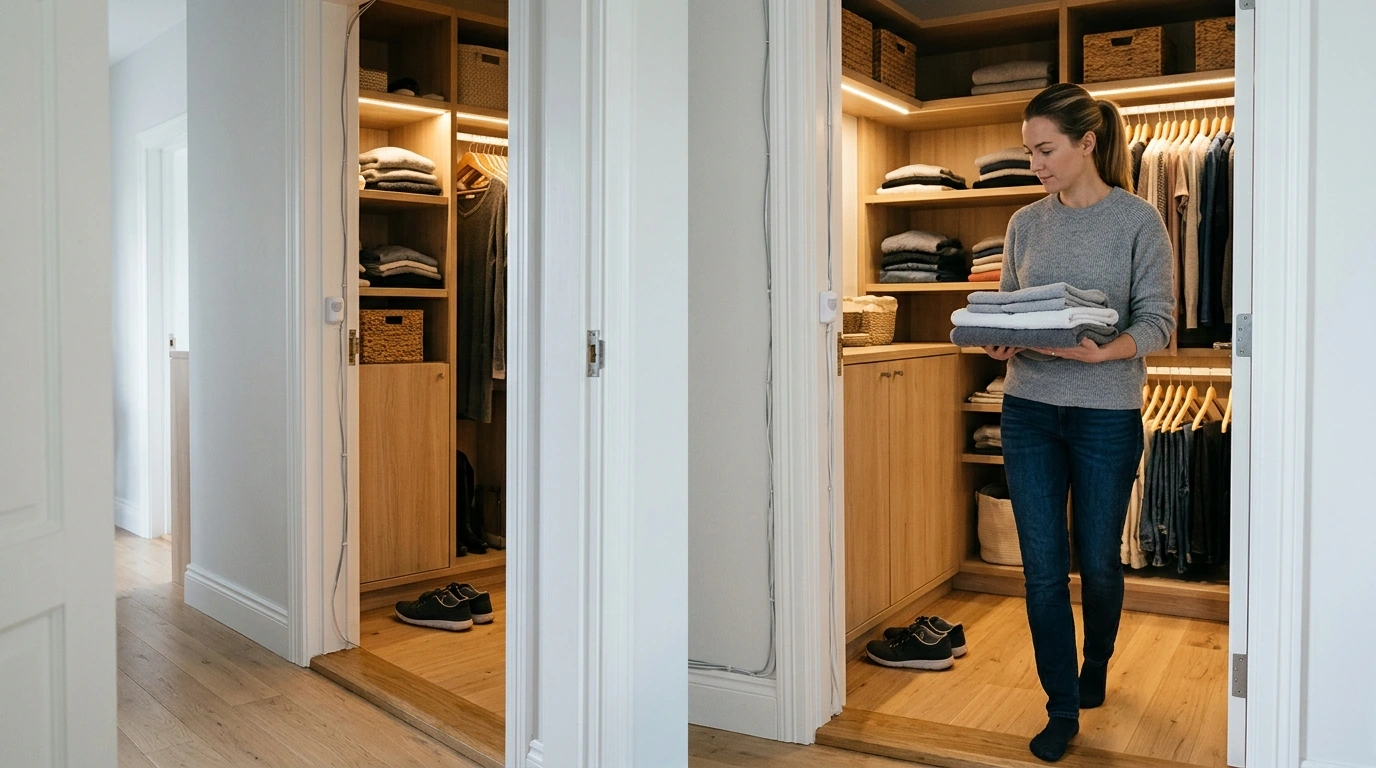
Motion-triggered lighting can make everyday spaces easier to navigate, whether you’re reaching into a closet or walking down a hallway. A PIR motion sensor switch offers a hands-free way to control compatible LED strip lights, but the right setup starts with more than choosing a location.
Our 60W PIR Motion Sensor Switch for LED Strip Lights is an option to consider when you want lighting to respond to movement. Before ordering, take a few minutes to compare your strip’s power draw, voltage, connections, and power supply with the switch’s requirements.
What a PIR motion sensor switch does
A passive infrared, or PIR, sensor detects changes in infrared energy in its field of view. When movement produces a detectable change, the switch can trigger connected lighting. Unlike a manual switch, it gives you a way to turn lights on without reaching for a control.
That can be especially convenient when your hands are full or a switch is difficult to reach. For example, a light near a closet entrance may help you see what you need without first searching for the wall switch. How the light operates depends on the particular switch and installation, so review its instructions rather than assuming a specific detection range, delay time, or sensitivity setting.
Where motion-triggered LED strips can be useful
Under cabinets: Strip lighting can illuminate a work surface where you prepare food or organize supplies. Plan the sensor position so your movement is visible to it, rather than hidden behind a cabinet edge or other obstruction.
Closets: A motion-triggered strip can make shelves and hanging areas easier to see as you enter. Consider where a door, clothing, or stored items might block the sensor’s view.
Hallways: A strip along a suitable surface can add light along a walking route. Position the sensor with the intended approach in mind, and test it from the direction you normally enter.
Wherever you install it, the sensor needs a clear view of the movement area. Before using the switch in a damp space or outdoors, confirm that it is rated for those conditions; an indoor location should not be assumed suitable simply because it is sheltered.
Check your LED strip setup before ordering
The switch’s 60W rating is a starting point for evaluating the connected load. Find the strip manufacturer’s power specification and calculate the total draw for the length you plan to connect. The strip, switch, and power supply must also have compatible voltage requirements, and the connections must suit the intended wiring arrangement.
To estimate power, multiply the strip’s watts per unit of length by the installed length, using matching units. For example, a strip specified at 4 watts per foot would draw an estimated 20 watts over 5 feet. Compare your result with the switch’s stated rating and follow the manufacturer’s requirements for the complete setup.
LED strip compatibility checklist
| Check | What to confirm |
|---|---|
| Power | Total strip load is appropriate for the switch’s 60W rating. |
| Voltage | The strip, power supply, and switch have compatible voltage requirements. |
| Connections | Connectors and wiring match the intended setup. |
| Location | The installation environment is suitable for the switch. |
Use this table as a practical checklist, not a guarantee of compatibility. If a specification or wiring detail is missing, resolve it before buying or connecting components. For general background on LED lighting, see the U.S. Department of Energy’s LED lighting guide.
Plan a safe, effective installation
Start by choosing a sensor position with a clear view of the area where you want movement to trigger the light. Think about the path you’ll take through the space and whether doors, shelving, or other objects could obstruct the sensor. Follow the product’s installation instructions when deciding where and how to mount it.
Disconnect power before working on any connections, and follow both the switch and power-supply instructions. If you’re unsure how the components should be wired, consult a qualified electrician rather than guessing. The Occupational Safety and Health Administration’s electrical safety resources provide additional general information about electrical hazards.
Once installation is complete and power is restored, test the light by moving through the intended area. If it does not respond as expected, disconnect power before inspecting connections or changing the installation, and adjust sensor placement as directed by the instructions.
Explore the 60W sensor switch
Our 60W PIR switch is a practical choice to explore if you want motion-triggered LED strip lighting and your components meet its requirements. Visit the product page for current price and availability, and compare the specifications with your planned setup before ordering.
If you’re also refreshing the room around your lighting, our Beige Travertine U-Shape Sculpture is a separate decorative option for an interior shelf or display. Keep decorative objects clear of the sensor’s view.
FAQ
Can this switch work with any LED strip?
No. Compatibility depends on the strip’s power draw, voltage, connections, and power supply. Check these requirements before ordering.
What does the 60W rating mean for my LED strip?
It is the switch’s stated power rating. Compare it with the total power draw of the connected strip, calculated from the manufacturer’s specifications.
Where should a PIR sensor be placed?
Choose a position with a clear view of the area where movement should trigger the light. Follow the product’s installation instructions and avoid obstructions.















Leave a comment