Best Age for a Child to Wear a Scarf: Safety Guide
What is the best age to give a child a scarf?
Most children can start wearing a scarf safely around age 3, once they can reliably follow simple directions (like “keep it on your neck” and “don’t put it over your face”) and can remove it on their own. Before age 3, scarves are generally better avoided because they can be a strangulation hazard and may ride up toward the mouth and nose during play, stroller time, or naps.
Even after age 3, the “best” age depends on your child’s habits and your setting. A calm preschooler who keeps winter gear in place may do great with a scarf, while an older child who loves roughhousing might be better with a different neck warmer for school or recess.
How to decide if your child is ready
A child is typically ready for a scarf when they can: (1) take it off without help, (2) keep it loose and low on the neck (not covering the face), and (3) understand basic safety rules. For daycare, preschool, and elementary school, check the policy—many schools prefer alternatives because scarves can snag on playground equipment.
Safer scarf habits (and smarter alternatives)
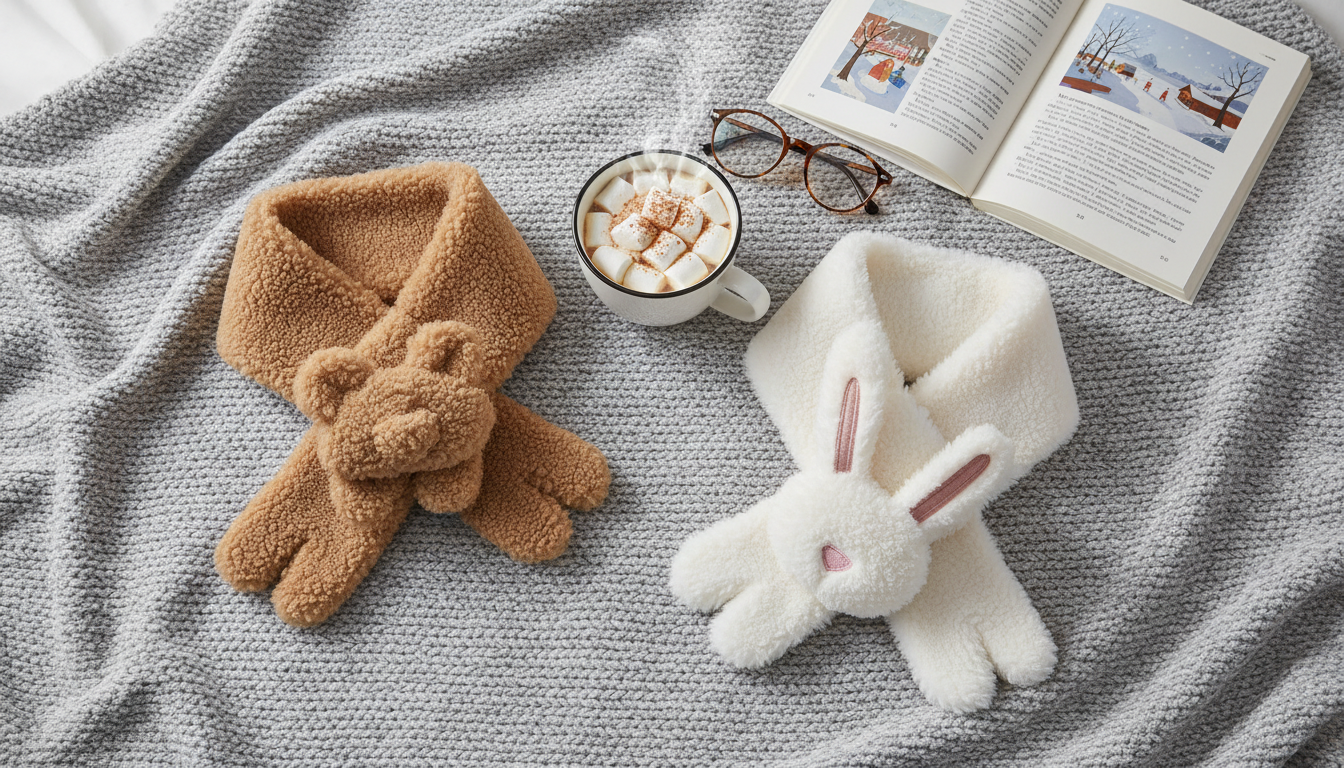
If you do choose a scarf, prioritize comfort and safety. Use a short, soft scarf that sits close to the neck and avoid long ends. Skip scarves during active play or when your child will be unsupervised outdoors. A neck gaiter, cowl, or a plush winter scarf designed to stay put can offer warmth with fewer dangling parts.
For a deeper look at choosing soft, warm options for kids (including fit, materials, and everyday school use), see the guide here: plush kids’ winter scarf guide.
FAQ
What is safer than a scarf for a toddler in winter?
A snug neck warmer or gaiter is usually safer than a traditional scarf because it has no long ends to snag and is less likely to shift over the face. Choose a soft, breathable fabric and remove it during sleep or if it becomes wet.













Leave a comment