Fix or Replace a Gas Grill? A Simple Cost Check
Is It Worth Fixing a Gas Grill?
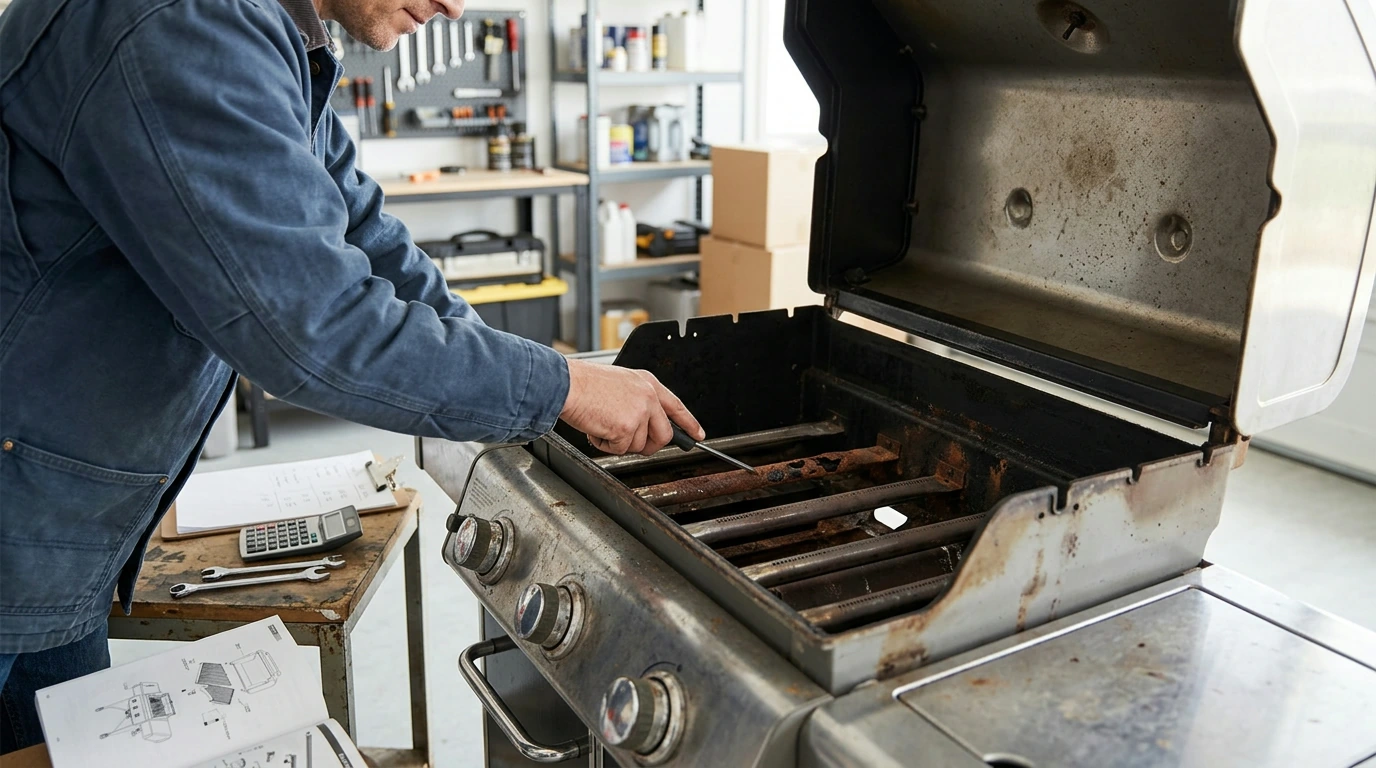
Often, yes—especially when the fix is small, the grill body is still solid, and you like how it cooks. Our team usually recommends repairing a gas grill when the firebox isn’t rusted through, the lid still seals reasonably well, and replacement parts are easy to get. In those cases, a modest investment can restore reliable heat, cleaner ignition, and better fuel efficiency.
When a Repair Typically Makes Sense
Fix your grill when the problems are localized and common: weak or uneven flames from clogged burners, a finicky igniter, worn heat tents/flame tamers, or a failing regulator/hose. These parts are designed to be replaced, and swapping them can bring back consistent temperature control for weeknight cooking and longer weekend cooks.
It’s also worth fixing if the frame is sturdy and the cookbox has only surface corrosion. A deep clean—burner ports, venturi tubes, drip tray, and grease channels—paired with a couple of new components can make an older grill feel “new” again.
When It’s Better to Replace
Replacement is usually the smarter move if you see heavy structural rust, holes or cracks in the firebox, or a warped lid that won’t hold heat. Frequent flare-ups caused by damaged internals, recurring gas-flow problems, or multiple major parts failing at once can also push the cost and effort beyond what’s practical.
If you’re already considering an upgrade for better performance and durability, you can compare features and build quality in our premium guide: elite outdoor gas BBQ grill options for premium patio cooking.
A Quick “Worth It” Checklist
Repair is typically worthwhile when: (1) the grill heats up but struggles to stay even, (2) the issue points to a single part, (3) the cart and firebox are stable, and (4) you can complete the fix safely with the gas turned off and the tank disconnected.
FAQ
How often should I replace gas grill burners?
Replace burners when flames are uneven, the ports are corroded or split, or you notice persistent low heat after cleaning. For many grills, burners last several seasons with regular cleaning and dry storage.














Leave a comment