Wooden Dollhouse With 29 Accessories & Custom Lights
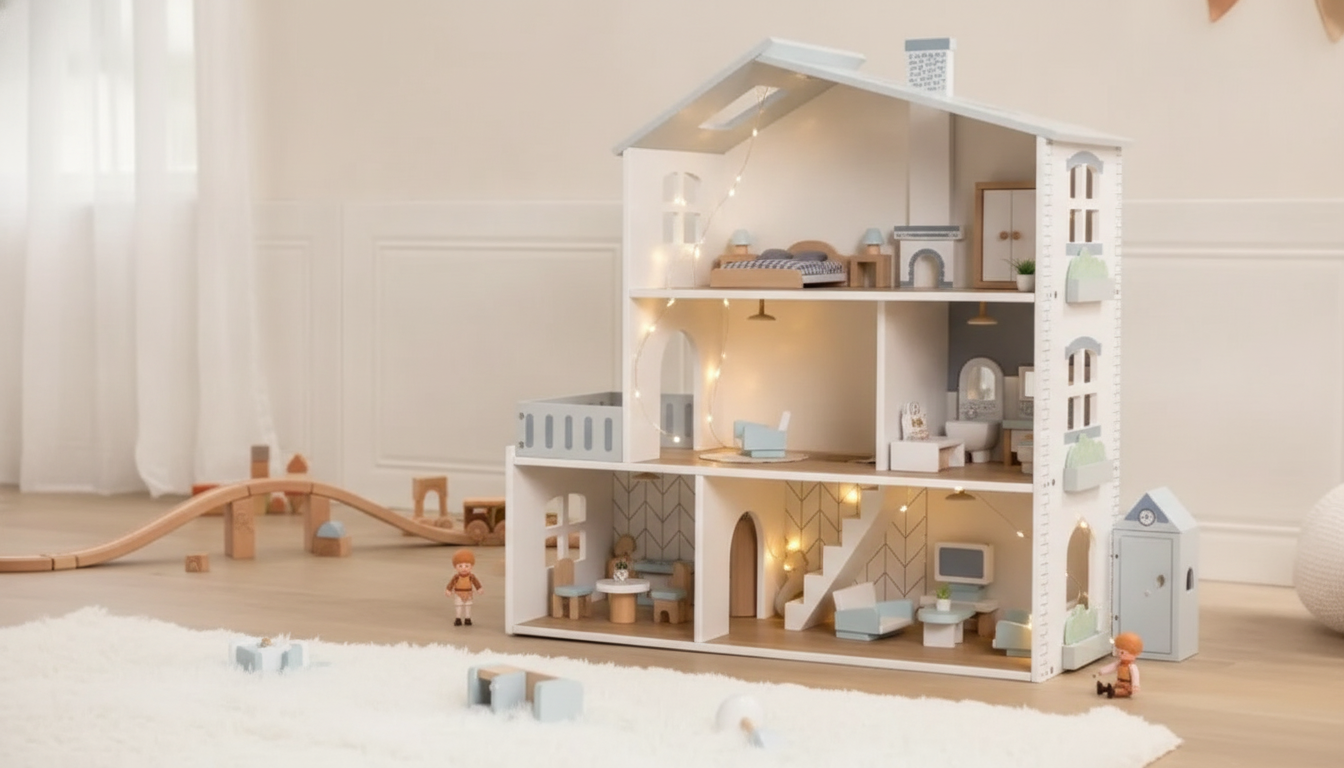
Wooden Dollhouse with 29 Accessories & Customizable Lighting: A Playroom Showpiece That Grows With Imagination
A wooden dollhouse becomes more than a toy when it invites ongoing storytelling, hands-on decorating, and cozy “lights on” evening scenes. The right set feels complete from day one—so kids can jump straight into play—while still leaving room for new ideas as their stories get more detailed. Below is a practical guide to what matters in a dollhouse with included accessories and adjustable lighting, how to set it up smoothly, and what to check so it stays sturdy and enjoyable for years.
Why a lit wooden dollhouse changes the way kids play
- Lighting adds mood and time-of-day storytelling. Instead of repeating the same “daytime” scene, kids can act out morning routines, bedtime wind-downs, birthday parties, or even silly “power outage” adventures that require flashlights and teamwork.
- Wood construction often feels more stable under frequent play. Wooden structures typically hold up well to being moved, nudged, and leaned on during energetic scenes, especially compared with very lightweight plastic houses that can slide around.
- Accessories reduce “blank house” frustration. When a house arrives empty, kids may stall because they can’t decide what each room is for. A good starter set helps them begin immediately without needing extra purchases.
- Customizable lighting encourages experimentation. Changing light settings can make the same room feel like a calm nursery, a bustling kitchen, or a spooky hallway—prompting kids to restage scenes and try new narratives.
What comes with the 29-piece accessory set (and how to use it)
Accessories do more than decorate—they give kids quick “anchors” for building scenes. A bed tells you it’s a bedroom; a table signals gathering, sharing, and conversation. That clarity helps kids start playing faster and makes shared play smoother because everyone understands the setting.
- Define room purpose quickly. Place the biggest “identity” piece first (bed, dining table, sofa), then add smaller items to finish the scene.
- Create mini story prompts. Set the table and ask, “Who’s coming over?” Put a figure in bed and ask, “Why can’t they sleep?”
- Rotate accessories weekly. Keep some pieces in storage and swap them out. The dollhouse feels refreshed without adding clutter to the playroom.
- Make cleanup kid-led. Use small labeled bins or pouches by room (Kitchen, Bedroom, Living Room). When the storage system mirrors the dollhouse layout, kids can reset the house independently.
Accessory-driven play ideas by room
| Room | What accessories do | Quick story starter |
|---|---|---|
| Kitchen/Dining | Turns empty space into routines and social scenes | A surprise guest arrives for dinner |
| Bedroom | Supports caretaking play and bedtime rituals | Nightlight on, a lost toy must be found |
| Living Room | Encourages conversation and role switching | Movie night gets interrupted by a mystery sound |
| Bathroom/Laundry | Adds realism and sequencing (before/after) | Getting ready for a big day out |
Customizable lighting: practical details that matter
Lighting is most enjoyable when it’s easy for kids to control and sturdy enough for everyday use. Before buying, it helps to think about how kids actually play—hands moving quickly, characters traveling room to room, and accessories being rearranged mid-story.
Safety, materials, and durability checkpoints
- Check for smooth edges and secure fittings. Well-finished corners and stable connections help reduce pinches and splinters.
- Be mindful of small parts around younger children. If toddlers share the home, store accessories out of reach and consider supervised play. For more detail on small-part concerns, see the CPSC Small Parts Regulations (16 CFR Part 1501).
- Confirm child-appropriate finishes. After unboxing, finishes should not have strong odors or feel tacky. Surfaces should wipe clean without transferring color.
- Prioritize stability. A wider base and solid wall connections reduce wobble when kids reach into upper floors.
- Secure battery/electronic compartments. If the dollhouse uses batteries for lighting, the compartment should be firmly closed so it stays protected during play.
For a broader overview of toy safety habits at home, the American Academy of Pediatrics toy safety guidance is a helpful reference for families.
Setup and playroom placement tips
Making it personal: simple customization ideas
A closer look at the featured dollhouse
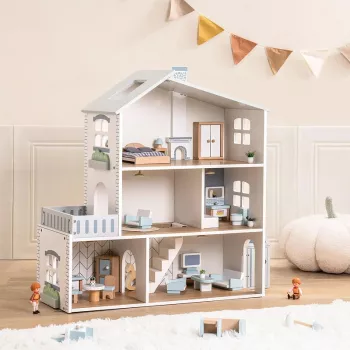
If you want a play set that feels complete right away, Wooden Dollhouse with 29 Accessories & Customizable Lighting is designed for immediate play: included accessories reduce the “empty room” problem, and the atmosphere-building lights help kids create day-to-night scenes without extra add-ons.
A simple add-on for the playroom look
For a grown-up touch on nearby shelves or a reading corner (outside the play zone), Beige Travertine U-Shape Sculpture – Modern Stone Decor for Home Interiors can help the room feel styled without competing with the dollhouse itself.
FAQ
What age is a wooden dollhouse with small accessories best for?
It’s typically best for kids old enough to handle small pieces safely, often preschool age and up, with adult supervision as needed. If toddlers or younger siblings are in the home, store small accessories out of reach and consider setting clear play-area boundaries.
How do customizable dollhouse lights typically work?
Many dollhouse lighting systems use simple on/off switches or easy controls powered by batteries. Look for designs where the lighting feels built-in and the battery compartment is secured, so components stay protected during everyday play.
How can accessories be stored so they don’t get lost?
Sort pieces by room in small bins or zip pouches and keep a shallow “current scene” tray for items in use. A quick end-of-play routine—returning kitchen items to the kitchen bin, bedroom items to the bedroom bin—helps kids maintain the set with minimal help.










Leave a comment