Reiki Stress Relief Checklist: A Fast Daily Reset

Your Reiki Stress Relief Checklist: A Simple Digital Routine for Calm, Self-Healing, and Energy Alignment
Stress can build quietly—tight shoulders, racing thoughts, shallow breathing, and an overall feeling of being “off.” A Reiki-inspired checklist offers a gentle, repeatable way to pause, reset your nervous system, and return to a more grounded baseline. The goal isn’t to “do it perfectly,” but to give your body and mind a familiar sequence they can recognize as safe, steady, and calming—especially on busy days.
Reiki is widely used as a relaxation practice, and many people pair it with simple breathwork and grounding. For an overview of what Reiki is (and what current evidence does and doesn’t say), see the National Center for Complementary and Integrative Health (NCCIH) page on Reiki. For broader context on stress, the American Psychological Association’s stress resources are also helpful.
What a Reiki stress-relief checklist helps with
- Creates a consistent pause to interrupt stress spirals and return to the present moment
- Supports a calmer mind-body state through breath, touch, and intention
- Encourages self-care habits that are easy to repeat even on low-energy days
- Helps track what techniques feel most calming (breathing, hand positions, grounding, hydration, reflection)
- Fits into short time windows: 3 minutes, 10 minutes, or a longer wind-down
Prepare your space in under two minutes
- Choose a posture: seated with feet on the floor, or lying down with a small pillow under knees.
- Reduce sensory overload: lower screen brightness, silence notifications, soften lighting.
- Set a boundary: start a 3–15 minute timer to prevent clock-checking.
- Optional comfort cues: a blanket, soothing scent, or gentle music at low volume.
- Hydrate briefly: a few sips of water can pair the practice with a grounding physical action.
The core checklist: a step-by-step Reiki self-practice
This checklist is designed to be “plug-and-play.” Repeat it the same way for a week, then adjust based on what your body responds to. If you’re using a structured guide, keep it phone-friendly so you can start without thinking—especially during stressful moments.
1) Arrive (about 30–60 seconds)
Take 3 slow breaths, lengthening the exhale. A longer exhale helps cue relaxation; if you’d like a simple breathing approach, the NHS breathing exercises for stress page offers straightforward options.
2) Set intention (10 seconds)
Choose one line that feels doable today. Example: “Allow calm and clarity to return.” Keep it simple—an intention is a direction, not a demand.
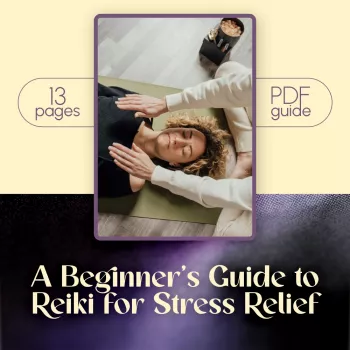
3) Hand placement sequence (2–10 minutes)
Choose 2–4 hand positions and stay with each for 30–90 seconds. Hands can rest lightly, or hover if touch feels uncomfortable.
- Heart center: palms over chest, inviting steadiness and softening.
- Solar plexus: upper abdomen, supporting a sense of ease and “unclenching.”
- Lower abdomen: settling the body and supporting grounding.
- Forehead/temples: helpful for mental overload and repetitive thoughts.
- Back of neck: supportive when tension collects in shoulders and neck.
4) Stay with sensation (throughout)
Notice warmth, tingling, heaviness, pulsing, or subtle shifts. Nothing needs to happen for the practice to “work.” The checklist is successful when you show up and let your system downshift at its own pace.
5) Ground and close (30–60 seconds)
Place hands on the lower abdomen, feel your feet (or points of contact with the bed), and take one final slow breath.
6) Quick reset note (optional, 10 seconds)
Choose a checklist version that matches the moment
| Situation | Time | Suggested checklist steps | Best when you feel |
|---|---|---|---|
| Before a busy day | 5–7 min | 3 breaths → intention → heart + solar plexus → grounding | Rushed, scattered |
| Midday work break | 3–5 min | Exhale-focused breathing → hands at temples/forehead → hands at heart | Mentally overloaded |
| After conflict or heavy emotions | 8–12 min | Intention → heart + abdomen → gentle jaw/shoulder release → grounding | Tense, reactive |
| Before sleep | 10–15 min | Dim lights → abdomen + heart → slow breathing → gratitude note | Restless, wired |
Energy alignment cues to add when stress feels “stuck”
Make the checklist sustainable: small habits that keep it going
When to adjust, and when to seek extra support
A ready-to-use digital checklist for daily practice
A structured checklist reduces decision fatigue—no need to remember steps when stressed. If you want a simple, repeatable routine you can pull up anytime, Your Reiki Stress Relief Checklist (digital download) is designed for quick resets, work breaks, and evening wind-downs, with space for light tracking so you can see what helps most.
For days when you need extra grounding, pairing your reset with a short outdoor decompression walk can help. A small, comfortable carry option like the Lightweight 3L cycling backpack for outdoor decompression walks makes it easier to bring water and essentials without overthinking.
FAQ
How long should a Reiki-based stress relief routine take?
Most sessions fit into 3–5 minutes for a quick reset, 8–12 minutes for deeper settling, or 10–15 minutes as a bedtime wind-down. Consistency matters more than duration, and on hard days a 60-second version (slow exhale + hands on heart) is enough to keep the habit steady.
Do you need to be attuned to Reiki to use a self-soothing checklist?
No—many checklist steps are accessible to anyone, including breathwork, grounding, gentle hand placement or hovering, and setting a calming intention. Treat it as a relaxation routine and keep your focus on what feels safe and supportive in your body.
What if the practice makes emotions feel stronger?
Emotions can surface when the body finally slows down, so it can help to shorten the session and add grounding (open your eyes, feel your feet, and lengthen the exhale). If you feel overwhelmed, return to neutral supports like water and steady breathing, and seek professional help if distress is persistent or interferes with daily life.














Leave a comment