Copper & Glass Postmodern Chandelier for Living + Dining
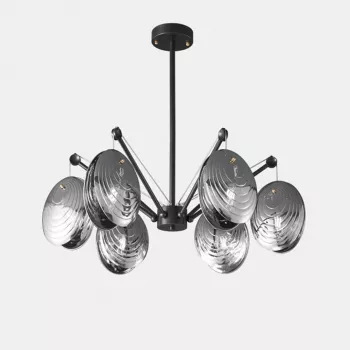
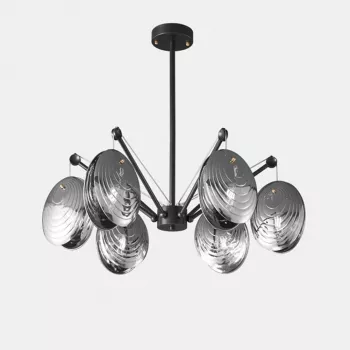
Luxury Postmodern Copper Glass Chandelier for Living Room and Dining Spaces
A chandelier sets the emotional temperature of a room before any furniture does. Our postmodern copper-and-glass design is made for living rooms that need a sculptural center and dining areas that deserve a deliberate glow—warm, reflective, and confidently modern without feeling cold. For more guidance, see Lights of Scandinavia: Lighting | Shop Ceiling, Wall and Floor Lamps.
If you’re building a space that’s equal parts welcoming and design-forward, this is the kind of fixture that helps everything else feel intentional—from the rug to the table setting.
What Makes This Chandelier Feel Postmodern (Not Just Modern)
Postmodern lighting tends to communicate in contrasts, and that’s exactly where copper and glass shine together.
- Contrast as the design language: luminous glass brings clarity and lift, while copper-toned metal adds grounded warmth and depth.
- Function first, then a statement: it reads as real lighting (not just decor) from the moment you flip the switch, but it still holds the room as a sculptural object.
- Geometry with softness: the materials and overall composition help it pair with streamlined contemporary pieces as easily as with richer, layered interiors.
Where It Works Best: Living Rooms and Dining Spaces
The easiest way to make an open-plan home feel “designed” is to give it one strong, coherent ceiling moment. This chandelier can do that job without forcing the rest of your choices.
- Living room placement: center it over the primary seating zone to visually anchor the conversation area—especially helpful in rooms with higher ceilings or lots of architectural lines.
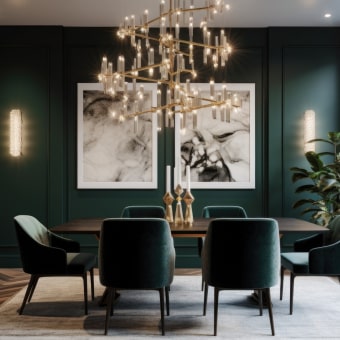
- Dining placement: hang it centered over the table to create a defined dining island; copper tends to flatter wood, stone, and neutral textiles by adding warmth.
- Open layouts: use it as the visual handoff between lounging and dining—one fixture that unifies the two functions while still feeling elevated.
A Practical Sizing & Hanging-Height Guide (Quick Reference)
Chandelier placement is less about rigid rules and more about comfort: clear sightlines, walkable paths, and light that lands where you actually live. Plan clearance first, then style.
Chandelier Placement Cheat Sheet
| Space | Recommended clearance/height | What it achieves | Common mistake to avoid |
|---|---|---|---|
| Dining table | Bottom of chandelier ~30–36 in (76–91 cm) above tabletop (typical 8 ft ceiling) | Creates focused dining light and a strong centerpiece | Hanging too high so the fixture feels disconnected from the table |
| Living room seating area | Keep comfortable head clearance in walk paths; visually center over seating zone | Defines the “room within the room” | Centering to the ceiling rather than to the furniture layout |
| Entry-adjacent open plan | Maintain clear sightlines from entry; avoid placing directly in a traffic funnel | Makes the home feel composed from the first step in | Placing where it competes with pendant clusters or ceiling fans |
| High ceilings | Use chain/rod length to bring light down into the living plane | Adds intimacy and reduces cavernous feel | Leaving it too close to the ceiling so light doesn’t reach the room |
Light Quality: Color Temperature, Glare Control, and Dimmer Use
- Choose a warm white tone: copper and glass typically look their best with warm white light (often 2700K–3000K), keeping the room inviting and the metal finish rich.
- Use dimming to shift the mood: brighter for hosting and tasks, softer for evenings and after-dinner lingering—without changing the fixture.
- Prioritize color rendering: bulbs with high CRI keep food, skin tones, and textiles looking natural rather than gray or flat.
For deeper lighting guidance and terminology, the Illuminating Engineering Society (IES) is a helpful reference. If you’re comparing fixture efficiency and general guidance, ENERGY STAR’s light fixture resources are also useful.
Pairing With Materials in the Room (So It Looks Collected, Not Random)
If you want the chandelier to look like it belongs, repeat its “ideas,” not its exact materials.
- Copper loves stone: travertine, limestone, and warm marble create a gallery-like mix of matte and shine.
- Echo the metal tone subtly: one or two accents (a mirror frame, cabinet pulls, a side-table detail) is enough—avoid matching everything in the same finish.
- Let glass meet texture: boucle, linen, and wool keep the room from feeling overly slick and help the light feel softer.
For a simple, sculptural counterpoint on shelves or a console, pair your lighting with our Beige Travertine U-Shape Sculpture – Modern Stone Decor for Home Interiors to bring in that warm, grounded stone note without visual clutter.
Installation Planning and Everyday Care
For electrical safety standards and best practices, professionals commonly reference NFPA 70 (National Electrical Code).
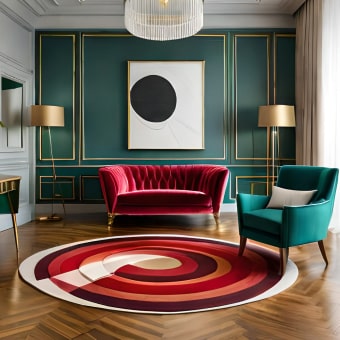
A Finished Look: Styling the Chandelier Into a Complete Room
In Stock in Our Store
- Luxury Postmodern Copper Glass Chandelier for Living Room and Dining Spaces
- Beige Travertine U-Shape Sculpture – Modern Stone Decor for Home Interiors
FAQ
How high should a chandelier hang over a dining table?
A common guideline is to hang the bottom of the chandelier about 30–36 inches above the tabletop for an 8-foot ceiling, adjusting slightly higher for taller ceilings. Prioritize comfortable sightlines so you can see and talk across the table without the fixture feeling intrusive.
What light color looks best with copper and glass?
Warm white light—often in the 2700K–3000K range—tends to flatter copper by enhancing its warmth while keeping glass looking clear and refined. Adding a dimmer gives you flexibility to shift from bright and energetic to soft and intimate.
Can this chandelier work in an open-plan living and dining area?
Yes—one chandelier can act as a unifying focal point when you align it with the primary zone (most often the dining table or main seating layout). To prevent dark corners, layer secondary lighting like floor lamps, table lamps, or discreet wall lighting in the adjacent zone.











Leave a comment