How to Set Micro Goals for Small Daily Wins
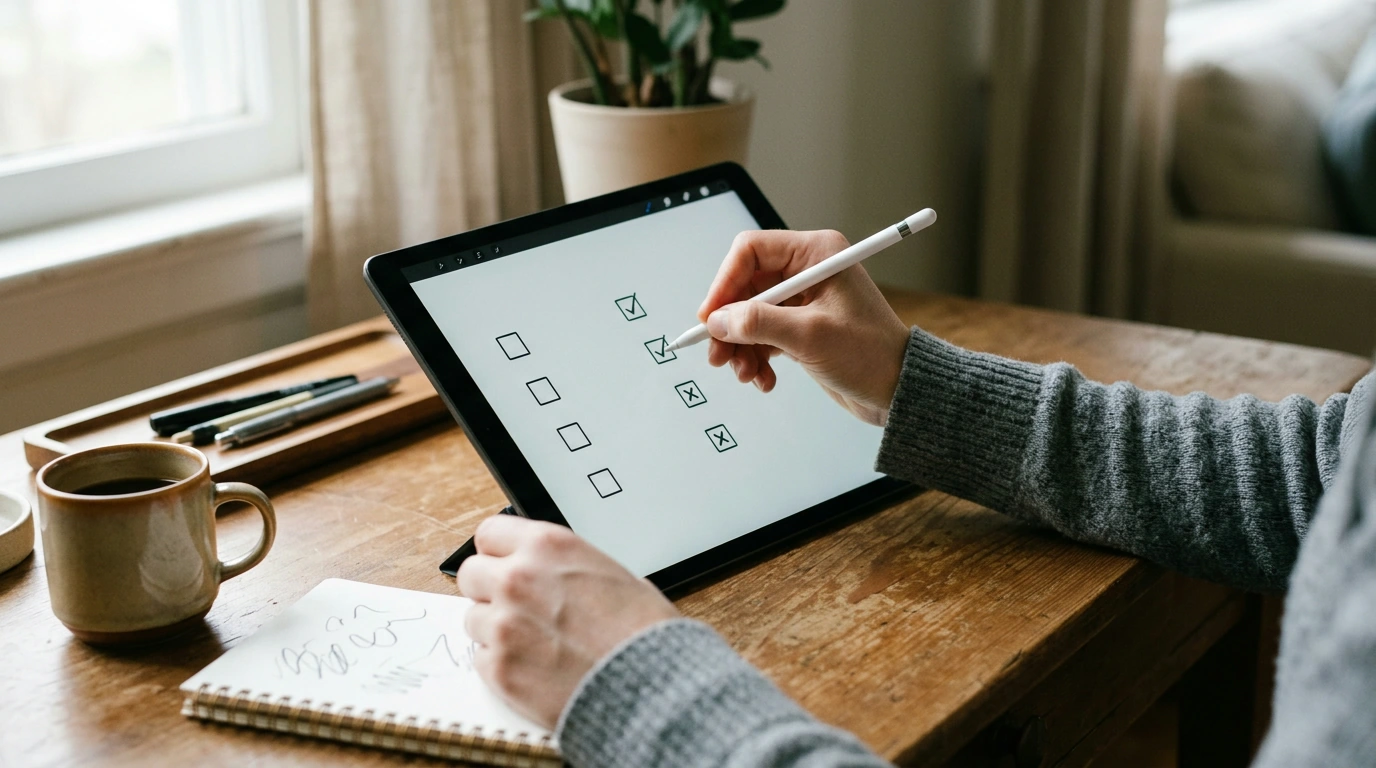
A big goal can feel easier to approach when you turn it into an action you can start today. Rather than waiting for a perfect schedule or a burst of motivation, you can choose one small step that fits the time you have.
Our Micro Goal Mastery Checklist is a digital download designed to accompany your goal setting and daily productivity. Whether you want to read more, build a movement habit, or make a workspace more comfortable, a micro goal gives you a practical place to begin.
What makes a goal a micro goal?
A micro goal is a specific, manageable action that supports a larger objective. “Get organized” describes an ambition, but “clear one section of my desk before I finish work” tells you exactly where to start and what to do.
That clear starting point can make beginning feel less daunting. It does not guarantee a particular result, and a small action may not feel equally easy every day. Still, it gives you something concrete to try instead of leaving the entire goal on your to-do list.
A useful micro goal also fits an ordinary day. If you want to read more, two pages after breakfast may be more practical than setting aside an hour you do not currently have. The point is not to limit your ambition; it is to give that ambition a next step.
Turn a big goal into a small next step
Start by choosing one larger goal that matters to you. Then ask, “What is one action I could take to move toward it?” Look for something you can describe clearly and complete in the time available. If the action contains several parts, pick just the first one.
Next, decide when and where you will try it. Connecting the action to an existing part of your day, such as finishing lunch or sitting down at your desk, can give you a helpful reminder. Choose a simple way to recognize completion, too: you might make a note or pause to acknowledge that you did it.
Use these examples as inspiration, not as rules. Adjust the action and timing to suit your schedule and energy.
| Larger goal | Micro goal | When to try it |
|---|---|---|
| Read more | Read two pages | After breakfast |
| Build a movement habit | Walk for five minutes | After lunch |
| Organize a workspace | Clear one section of the desk | Before finishing work |
| Learn a skill | Practice one exercise for ten minutes | After dinner |
For another approach to making a workable plan, the American Psychological Association’s guide to behavior change discusses setting realistic goals and taking small steps. The CDC’s tips for setting goals also offer ideas for making goals specific and tracking progress.
Put the Micro Goal Mastery Checklist to work
Our Your Micro Goal Mastery Checklist is a digital download for organizing small steps and recognizing daily wins. It costs $2.99 and is available from our product page.
To use it alongside your plan, choose one micro goal first. Keep the checklist with your goal-setting materials, complete the action when you planned to, and then take a moment to note what worked. For example, you might notice that reading after breakfast was convenient, or that a shorter practice session was easier to start.
You can use that observation to choose your next step. Repeat the same action if it suits you, adjust the timing if it does not, or select a different small action that supports the same larger goal. Our team recommends keeping the process simple enough that reviewing your plan does not become a bigger task than the goal itself.
Keep your routine flexible
Begin with one action rather than a long daily list. Once you know how that action fits into your routine, you can decide whether to repeat it or make room for another. A single completed step can also show you what kind of plan works for your current circumstances.
If your goal feels too large, reduce its scope. Try reading one page instead of two, clearing a corner of your desk instead of a whole section, or practicing for five minutes instead of ten. You can also move the action to a more convenient time or choose a different setting.
If your small step involves heading outdoors, decide what you actually need to bring before adding gear to the plan. For a longer outing, our Lightweight 3L Cycling Backpack is an option for carrying essentials. A short walk, though, may not require a bag at all.
Missed days are information, not a reason to abandon your goal. Look at what got in the way and adjust your plan without treating the interruption as a failure. Review your small wins regularly, notice what made them possible, and choose the next practical step from there.
FAQ
How small should a micro goal be?
Choose an action that feels manageable within the time and energy you have available. If starting is difficult, make the action smaller or choose a more convenient time.
Can I use micro goals for more than one area of life?
Yes. Micro goals can support work, learning, household tasks, and personal routines, though starting with one priority can keep your plan manageable.
What is the Micro Goal Mastery Checklist?
It is our digital download for goal setting and daily productivity, designed as a companion for focusing on small steps and wins.
















Leave a comment