Inspiration Igniter Checklist: Spark Creativity in Minutes
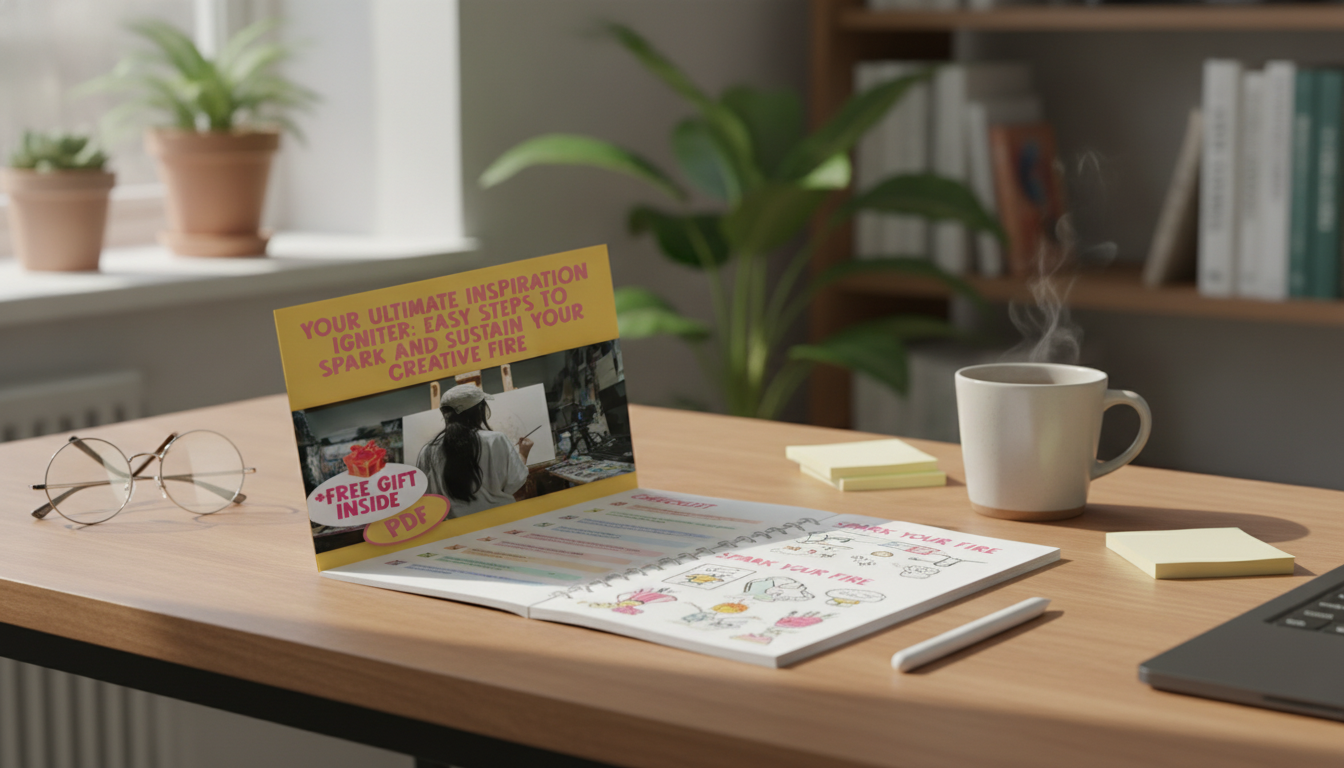
Your Ultimate Inspiration Igniter: A Digital Checklist to Spark and Sustain Creative Fire
Inspiration isn’t only a lightning bolt—it can be invited, captured, and protected. A checklist-driven approach turns scattered ideas into repeatable momentum with quick prompts, simple resets, and a plan for sustaining creative energy through busy days. If creativity feels inconsistent lately, the goal isn’t to “try harder,” but to make starting easier and finishing more automatic.
For a ready-to-run system, explore the Your Ultimate Inspiration Igniter digital checklist—a simple, repeatable sequence you can use in minutes.
What “inspired” feels like (and what blocks it)
Being inspired often shows up as a specific mix of feelings and behaviors—less “mystical” and more observable.
Signs inspiration is present
- Curiosity: you want to poke at an idea, test it, or learn more.
- Urgency to explore: you feel pulled to start before you overthink it.
- Effortless idea-chaining: one thought leads to three more without force.
- Playful risk-taking: you’re willing to make a rough attempt just to see what happens.
Common blockers
- Mental overload: too many open loops makes it hard to hear the next idea.
- Perfection pressure: judging too early shuts down experimentation.
- Lack of input: creativity needs raw material—images, conversations, music, nature, problems to solve.
- Unclear next step: inspiration fades when the “first move” isn’t defined.
- Depleted body: sleep, food, hydration, and movement strongly affect creative stamina.
Instead of waiting to “feel inspired,” build conditions that make inspiration more likely: lower friction, add novelty, and define a tiny next action. This lines up with behavior research emphasizing that small, doable actions are easier to repeat when motivation fluctuates (see the Stanford Behavior Design Lab (BJ Fogg): Behavior Model).
The Inspiration Igniter checklist: quick steps that work on low-energy days
On the days when energy is low, the best plan is a short sequence that reduces internal noise and gets you moving before your brain negotiates you out of it.
- Start with a 2-minute reset: drink water, change posture, and take three slow breaths to reduce mental static.
- Name the output: write one sentence describing what “done for today” looks like (a sketch, a paragraph, a rough concept).
- Use a timer: do 10–15 minutes of “draft-only” mode to remove quality pressure.
- Pick one spark source: a photo, a single song, a color palette, a headline, a quote, or a short walk.
- Capture fast: write 10 fragments (not full ideas) to generate momentum quickly.
Micro-steps to ignite inspiration (choose one per round)
| When it’s hard to start | Do this | Time |
|---|---|---|
| Mind feels crowded | Brain-dump 15 lines without editing | 3 min |
| Everything seems boring | Change input: new playlist / new location / one new reference image | 5 min |
| Perfectionism kicks in | Make an “intentionally messy” first draft | 10 min |
| No clear direction | Write the next smallest action as a verb (sketch, list, outline, test) | 2 min |
| Energy is low | Do a physical reset: stretch + daylight + water | 5 min |
If your spark source is a walk, a lightweight carry setup helps remove excuses. The Lightweight 3L Cycling Backpack for Running, Hiking & Outdoor Sports is an easy grab-and-go option for quick “input breaks” (headphones, notebook, water) that often restart idea flow.
How to become inspired on demand: three repeatable spark methods
Inspiration becomes more reliable when you use methods that don’t depend on mood. These three are simple, fast, and surprisingly productive.
1) Constraint method
Limit tools, time, or format to unlock creativity: one color, 100 words, three chords, one camera lens, one page, one headline. Constraints reduce overwhelm by shrinking the decision space, which makes starting easier.
2) Combination method
Fuse two unrelated inputs (an object + an emotion, a scene + a texture) and list 10 outcomes. The first few will be obvious; the later ones are where the interesting work tends to appear.
3) Question method
For a practical definition of creativity as producing ideas that are both original and appropriate, see the APA Dictionary of Psychology: creativity. That “appropriate” part matters: inspiration isn’t only novelty—it’s novelty that fits your goal.
Sustaining the creative fire: a simple weekly rhythm
When you’re stuck, it can help to reframe the problem as “How do I make the next five minutes easier?” rather than “How do I make something amazing?” If you want additional perspective on getting unstuck at work, Harvard Business Review: How to Boost Creativity When You’re Feeling Stuck is a useful starting point.
Make it stick: set up an inspiration-friendly environment
If your space feels visually noisy, one calming focal object can help signal “creative mode.” The Beige Travertine U-Shape Sculpture – Modern Stone Decor for Home Interiors can add a clean, grounded look to a desk or shelf without demanding attention.
The digital checklist: what to expect and how to use it
When you want a ready-made structure, the Your Ultimate Inspiration Igniter: Easy Steps to Spark and Sustain Your Creative Fire | Digital Checklist to Learn How to Become Inspired keeps the process lightweight: reset, define “done,” generate fragments, and leave a breadcrumb for tomorrow.
FAQ
What if inspiration doesn’t show up even after trying the checklist?
Shrink the action to 2–5 minutes and switch inputs (change location, music, or reference material) while focusing on quantity over quality. If your energy is genuinely depleted, prioritize basics—water, food, movement, and sleep—then return for a shorter round.
How long does it take to feel more consistently inspired?
Many people notice improvement within a week of daily micro-sessions, especially when the start time and workspace cues stay consistent. Reliability usually comes from repetition, not longer sessions.
Is this only for artists and writers?
No—these steps work for problem-solving, business brainstorming, studying, content planning, and personal projects. The methods are format-agnostic: you’re simply reducing friction and increasing useful output.















Leave a comment