8L Evaporative Air Cooler Fan (65W) with Remote & Humidifier
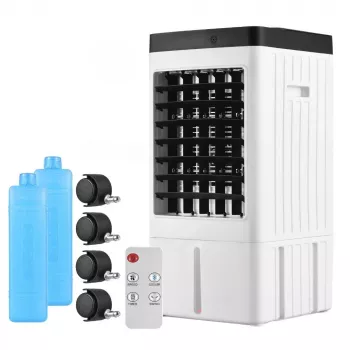
8L Portable Evaporative Air Cooler Fan with Remote Control and Humidifier (65W): Everyday Cooling for Dry-Heat Rooms
A portable evaporative air cooler can make warm rooms feel more comfortable by moving air through water-cooled media, adding gentle humidity while using less power than many refrigerant-based systems. This 8L, 65W model combines fan, evaporative cooling, and humidifier functions with remote control for convenient day-to-day use in bedrooms, home offices, and living spaces where air tends to feel dry.
What This Cooler Is Designed to Do
This style of cooler is built for comfort-focused, “right where you are” airflow—especially when the heat is dry and the air feels harsh on skin, eyes, or throat. Instead of relying on a compressor, it uses evaporation to create a noticeably cooler-feeling breeze along the airflow path.
- Delivers a cooling breeze through evaporative cooling rather than compressor-based refrigeration.
- Functions as a fan, evaporative cooler, and humidifier to improve comfort in dry conditions.
- Adds convenience features such as remote control operation for mode changes and settings from across the room.
- Supports flexible placement thanks to a portable form factor suited to spot-cooling in occupied areas.
- Works best when the room can get fresh air exchange (for example, a slightly open window or door) to prevent humidity from building up.
Key Features at a Glance
For daily use, the details that matter most tend to be tank size, power draw, and how easy it is to adjust settings once you’ve settled in—especially at night or during focused work sessions.
- 8L water tank capacity to extend runtime between refills during typical daily use.
- 65W power rating aimed at energy-conscious cooling compared with many compressor appliances.
- Remote control for convenient adjustments to fan speed, modes, and timers (as applicable).
- Humidifier-style operation that can reduce the “dry air” feeling common in hot, arid climates or air-conditioned rooms.
- Evaporative cooling is most noticeable in low-to-moderate humidity environments; results vary with weather and room ventilation.
Specifications (Model Overview)
| Item | Details |
|---|---|
| Product type | Portable evaporative air cooler fan + humidifier |
| Water tank capacity | 8L |
| Power | 65W |
| Controls | Remote control + onboard controls (typical) |
| Best-use environments | Dry heat; ventilated rooms; spot cooling |
| Primary benefits | Low-power comfort cooling, airflow, added humidity |
If you’re ready to outfit a bedroom or office for the warmer months, see the 8L Portable Evaporative Air Cooler Fan with Remote Control and Humidifier – 65W.
How Evaporative Cooling Changes Comfort
Evaporative cooling works because water absorbs heat as it evaporates. When air is pulled through wet cooling media, a portion of the water becomes vapor, and the air leaving the unit can feel cooler—most noticeably when the surrounding air is dry.
- Evaporative cooling uses the natural heat-absorption of water evaporation to lower the air temperature felt in the airflow path.
- Unlike refrigerant AC, it does not “remove” heat from a sealed room in the same way; it works by exchanging indoor air with fresher air and increasing moisture.
- Comfort depends on relative humidity: the drier the air, the more evaporation can occur and the more noticeable the cooling effect.
- In already-humid climates, the added moisture can make the room feel sticky; using it as a fan-only mode may be preferable on humid days.
- For best results, position the cooler to blow toward the occupied zone while allowing some ventilation to bring in drier air.
For deeper background on how these units work and where they’re most effective, the U.S. Department of Energy overview is a helpful reference: Evaporative Coolers.
Where It Fits Best in a Home or Apartment
This type of unit tends to shine in rooms where you want comfort quickly without cooling an entire floor plan. Think “personal climate zone” rather than “whole-house temperature reset.”
Setup Tips for Better Performance
If you’re monitoring indoor comfort, established guidance like ASHRAE Standard 55 can be a useful starting point for understanding how temperature, humidity, and airflow interact.
Cleaning and Maintenance to Keep Air Fresh
For moisture awareness and preventing unwanted indoor issues, the EPA’s guide is a practical resource: A Brief Guide to Mold, Moisture, and Your Home.
Energy Use and Everyday Operating Costs
Remote Control Convenience in Daily Use
When to Choose an Evaporative Cooler Instead of Other Options
| Option | Strengths | Tradeoffs |
|---|---|---|
| Evaporative cooler | Low power, adds humidity, strong spot airflow | Less effective in high humidity; needs ventilation |
| Fan | Lowest cost and simplest | Does not lower air temperature |
| Refrigerant AC | Strong temperature reduction in closed rooms | Higher power use; drier air; more complex |
For summer comfort beyond the living room, a small accessory that helps on the go is the Lightweight 3L Cycling Backpack for Running, Hiking & Outdoor Sports. And if you’re refreshing a room for the season, the Beige Travertine U-Shape Sculpture – Modern Stone Decor for Home Interiors adds an easy, modern touch without taking up much space.
FAQ
Does an evaporative air cooler work in humid weather?
It works less effectively as humidity rises because evaporation slows down, so the air won’t feel as cooled. On humid days, fan-only mode plus better ventilation may feel more comfortable, and refrigerant AC may be the better choice when humidity is very high.
How long can an 8L tank run before refilling?
Runtime varies widely by fan speed, cooling mode, and how dry the room air is, but an 8L tank can often last for several hours up to much of a day in lighter-use conditions. Higher cooling/humidifying output uses water faster, so expect shorter runtimes during peak heat and very dry air.
How often should the water tank be cleaned?
Rinse and refresh the tank frequently—ideally every day or two during heavy use—to help prevent odor and residue. Plan on a more thorough cleaning regularly (such as weekly) and anytime the unit has been sitting with water.












Leave a comment