Aluminum vs Composite Flat Pedals: Which Is Better?
Are aluminum pedals better?
If you’re upgrading flat pedals, aluminum often feels like the “premium” choice—and in many cases it is. Aluminum-bodied pedals tend to deliver a more planted, confident ride because they’re usually built around stronger structures, wider platforms, and serviceable internals. That said, “better” depends on how you ride, how hard you strike pedals, and what you expect for long-term durability.
Our answer: aluminum is usually better for grip, stability, and longevity
Where aluminum pedals shine
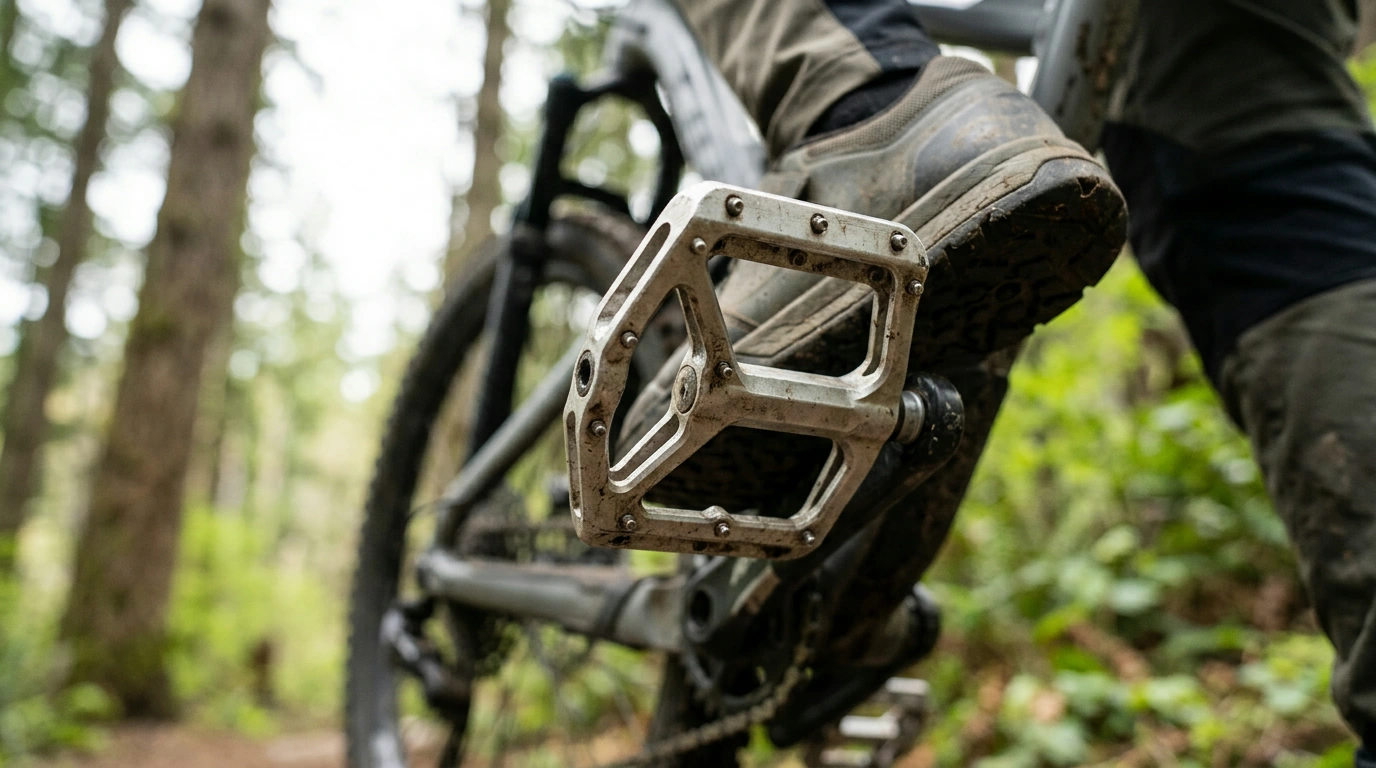
Aluminum platforms commonly use threaded metal traction pins that bite your shoe more consistently than molded plastic traction. Combined with a stiff body, that grip translates to fewer foot readjustments and better control on rough trails, wet commutes, and sprinty efforts.
Aluminum also holds up well under repeated impacts. Scrapes are normal, but the body is less likely to crack compared with many composite options. Many aluminum pedals also pair well with sealed bearings, which helps keep the spin smooth when you ride through rain, dust, and grit.
Where aluminum isn’t automatically “better”
Aluminum pedals can cost more, and they may transmit more trail feedback than a slightly more forgiving composite pedal. They can also be less forgiving to shins in a slip—sharp pins plus a rigid body are great for grip, not for missed pedals.
How our team suggests choosing
Choose aluminum if you ride aggressively, want maximum all-weather grip, or you’re tired of replacing worn pedals. Look for a wide, low-profile platform, replaceable pins, and sealed bearings for year-round riding. If you’re building a budget bike, riding casually, or prioritizing a softer pedal feel, a quality composite pedal can still be a smart pick.
For a deeper breakdown of flat pedal features—platform shape, pin layout, and sealed-bearing durability—see our guide: ultralight sealed bearing flat bike pedals with all-weather grip.
FAQ
What’s the difference between sealed bearing pedals and loose-ball pedals?
Sealed bearing pedals use cartridge-style bearings with seals to keep out water and grit, usually staying smoother with less frequent maintenance. Loose-ball pedals can work well but typically need more regular cleaning and adjustment to avoid roughness and play.















Leave a comment