Strapping vs Banding: What’s the Difference?
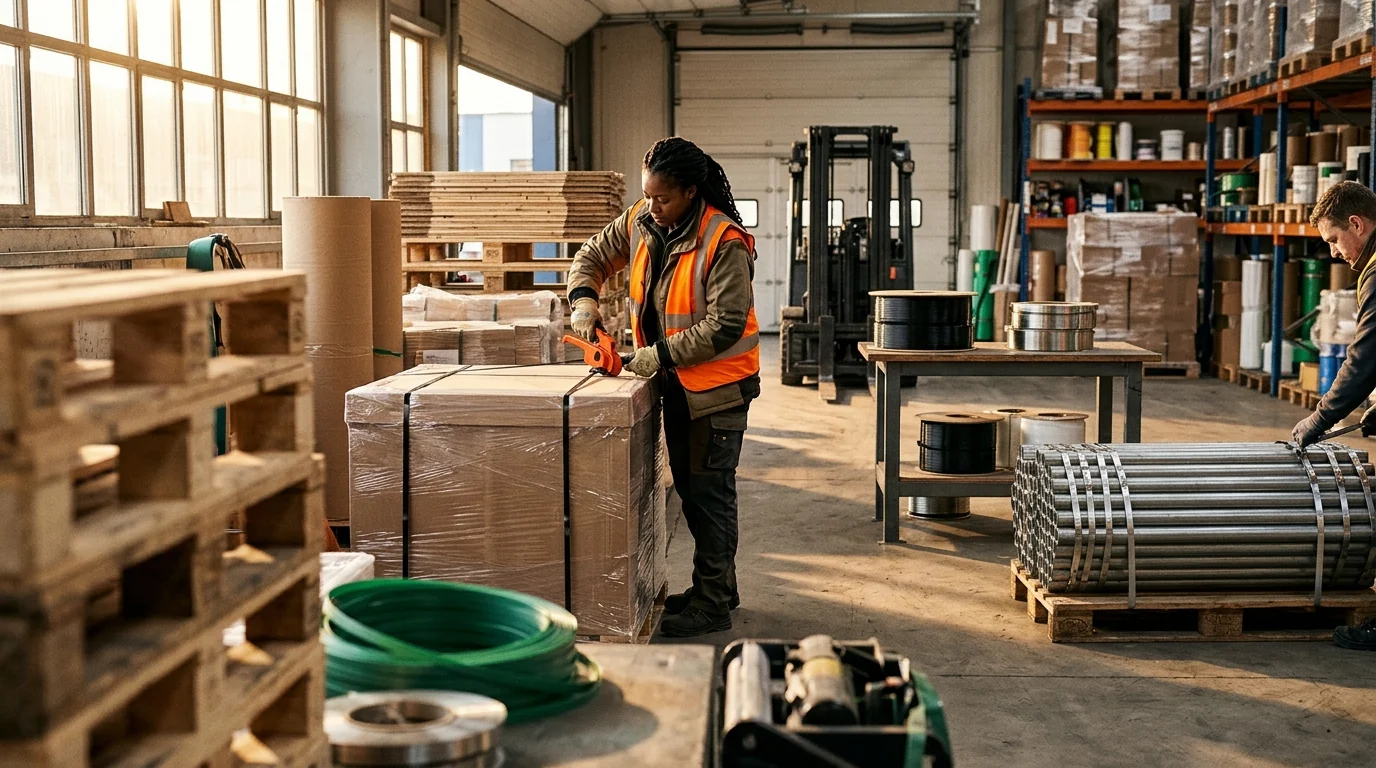
What is the difference between strapping and banding?
Strapping and banding usually mean the same thing: wrapping a narrow strip of material around items and securing it under tension. Both terms describe a way to bundle products, close packages, or hold a load together. You may hear one term more often than the other depending on the workplace, but neither guarantees a particular material, tool, or strength.
For example, a warehouse team might call the plastic strip around a pallet “strapping,” while another calls it “banding.” In both cases, the important details are the strap material, its width and strength, and how the ends are joined.
Which strap material should you choose?
Match the material to your load and handling conditions rather than choosing by name alone. Common options include:
- Polypropylene (PP): A lightweight option often used for closing cartons and bundling lighter items.
- Polyester (PET): A strong plastic option suited to many heavier palletized loads. It can absorb some movement without the sharp edges associated with steel.
- Steel: A high-strength option for demanding loads, including some rigid or sharp-edged materials. It requires appropriate tools and careful handling.
Load weight is only one factor. Consider whether the contents can shift or settle, whether edges could cut the strap, and what conditions the shipment will encounter. Use edge protectors where needed to protect both the strap and the package.
How do you secure strapping or banding?
The usual process is to wrap the strap around the load, tension it, and join the ends. Depending on the material and equipment, the joint may use a metal seal, a buckle, or a welded seal. Your tensioner, sealer, and seals must be compatible with the strap material and width.
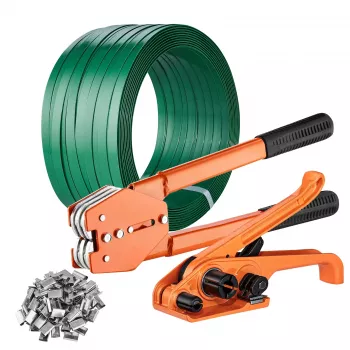
For a practical manual setup, see our guide to a manual PET strapping kit. A manual kit can tension and seal compatible PET strap without a powered strapping machine.
Keep hands clear while tensioning and cutting strap, and wear suitable eye and hand protection. Strapping helps hold a load together, but it does not replace appropriate pallet wrapping or cargo restraints when those are needed.
FAQ
Can you use a manual tensioner with PET strap?
Yes, if the tensioner is designed for PET strap and the strap width you are using. You will also need a compatible method for sealing the tensioned strap.















Leave a comment