Manual Strapping: 6 Steps to Tension, Seal, and Cut
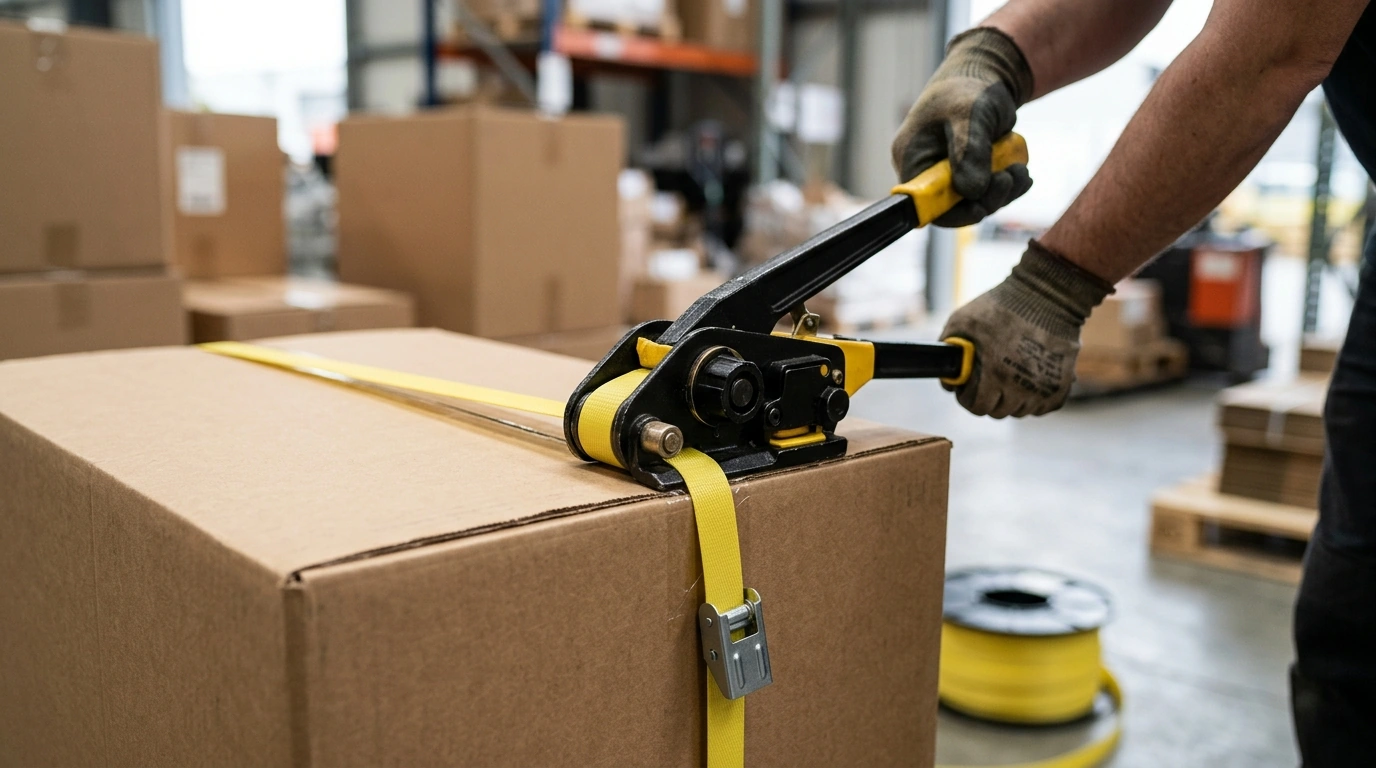
How to Do Manual Strapping (Step-by-Step)
Manual strapping is the go-to method when you need secure, repeatable load containment without power. Our team uses the same core process whether you’re unitizing cartons, bundling products, or stabilizing a pallet: wrap, tension, seal, and cut—while protecting both the load and the strap.
1) Choose the right strap and seal method
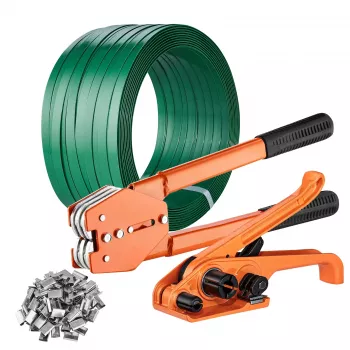
Start with PET strapping when you need strong tension retention for heavier or shifting loads. Pair it with the correct seals for your kit (typically serrated metal seals) and a compatible sealer. Using mismatched seals or tools is a common cause of slipping joints.
2) Prep the load and protect edges
Square up boxes or product so the strap path is straight and the bundle is stable. Add edge protectors on corners and any sharp contact points to prevent strap damage and to spread compression evenly across your load.
3) Thread the strap around the load
Wrap the strap around the item or pallet, keeping it flat (no twists). Overlap the working end so you have enough tail for the tensioner and seal—most manual tools need a few inches of free strap on both sides of the joint.
4) Tension the strap with a manual tensioner
Feed the strap ends into the tensioner and ratchet until the strap is snug. Aim for firm containment without crushing cartons or deforming product. If you see corners caving or product bowing, back off and add edge protection or adjust strap placement.
5) Apply the seal and crimp
Slide the seal over both strap layers at the overlap, then use the sealer to crimp fully—consistent, complete crimps are what prevent slip. Keep your hands clear of pinch points and stay out of the strap’s recoil path.
6) Cut, finish, and check
Cut the free strap with the cutter on your tool (or a dedicated cutter). Confirm the seal is tight, the strap is centered, and the load is stable. If it shifts when pushed, add another strap in a second direction (cross-strap) for better unitizing.
For a deeper walkthrough on getting tight loads with a manual PET strapping kit, visit our guide: https://uniqualle.com/guide-manual-pet-strapping-kit-tight-loads-without-power/.
FAQ
What’s the difference between PET and PP strapping?
PET strapping is generally stronger and holds tension better over time, which helps with heavier loads and loads that settle. PP strapping is more flexible and is commonly used for lighter-duty bundling and carton closure.















Leave a comment