Plastic Strapping Weight Limits: PP vs PET Strength

How much weight can plastic strapping hold?
Plastic strapping can hold a surprisingly wide range of weight, but the real answer depends on the strapping material (PP vs. PET), strap width and thickness, the seal or buckle used, and how the load is applied. In packaging, capacity is usually discussed as “break strength” (when the strap snaps) and “working load” (a safer, lower level used for real shipments).
As a general guide, polypropylene (PP) strapping is commonly used for lighter-to-medium bundles, while polyester (PET) strapping is designed for heavier loads and higher retained tension. PET is often chosen when you need tight, stable unitizing—such as keeping stacked cartons or building materials from shifting—because it tends to recover better from impacts and maintains tension more reliably than PP.
What actually determines the hold strength?
Even if a strap’s rated break strength is high, the system is only as strong as its weakest point. Seals, buckles, welds (for friction-weld tools), and edge protection all matter. Sharp corners can cut strap performance dramatically unless you use corner protectors. Also, the way you strap the load changes the effective capacity: multiple straps, more wraps, or a different strap pattern can increase stability more than simply choosing a stronger strap.
A practical way to choose the right strap
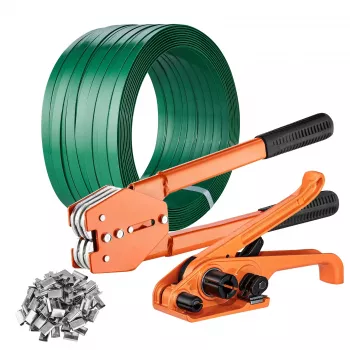
Match the strapping to the load type and shipping conditions, then prioritize consistent tensioning and reliable seals. For many heavy pallet loads, PET strapping with proper tensioning and secure seals is a common choice when steel strapping isn’t needed. For a hands-on look at using PET to tighten loads without power, see this guide to a manual PET strapping kit.
If you’re unsure, it’s safer to step up a size in strap and improve edge protection and strap patterning than to run near the strap’s break limit.
FAQ
What’s the difference between PET and PP plastic strapping?
PET strapping generally handles heavier loads and maintains tension better, while PP strapping is more flexible and is commonly used for lighter bundling and carton closure.















Leave a comment