USB Condenser Mics Explained: How They Work & What to Buy

Can a condenser mic be USB?
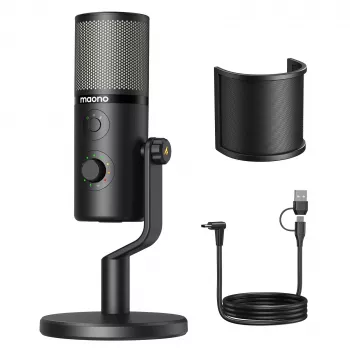
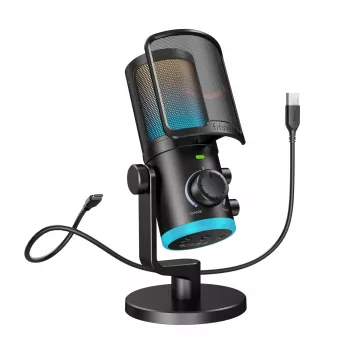
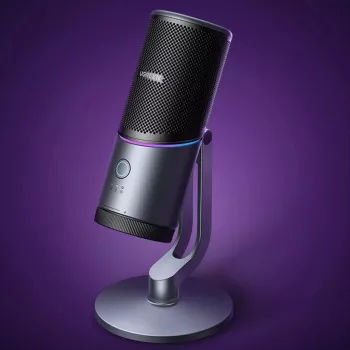
Yes. A condenser microphone can absolutely be USB. In a USB condenser mic, the capsule is still a condenser design, but the mic also includes built-in electronics—like a preamp and an analog-to-digital converter—so it can send a digital audio signal straight to your computer through a USB cable.
How a USB condenser mic works
Traditional condenser mics usually output analog audio and need external gear: an audio interface and, often, 48V phantom power. A USB condenser mic combines those pieces inside the mic body. That means you can plug it into a laptop or desktop and start recording or streaming without a separate interface.
Why people choose USB condenser mics
USB condenser mics are popular for podcasts, streaming, voiceovers, remote meetings, and basic home studio use because setup is fast and consistent. Many models also include a headphone jack for zero-latency monitoring, onboard gain controls, and pattern selection (like cardioid, omnidirectional, or bidirectional) to fit different recording situations.
What to watch for before buying
USB condenser mics vary in quality and features. Pay attention to pattern options, headphone monitoring, maximum sample rate/bit depth, and whether the mic offers onboard controls you’ll actually use. Also consider your environment: condensers are sensitive, so untreated rooms may capture more echo and background noise than expected.
For a practical walkthrough on setting up a multi-pattern USB condenser mic for streaming and podcasts, visit this USB condenser mic setup guide.
For USB Condenser Mics Explained: How They Work & What to Buy, the best answer depends on fit, material, care instructions, and how the product will be used day to day.
Checking those details first helps avoid a poor match and keeps the choice practical after delivery.
For USB Condenser Mics Explained: How They Work & What to Buy, the best answer depends on fit, material, care instructions, and how the product will be used day to day.
FAQ
Do USB condenser mics need phantom power?
No. USB condenser mics get power through the USB connection, so they don’t require external 48V phantom power from an interface or mixer.













Leave a comment