Sleep In Better: A Night-Before Checklist That Works
Sleeping In Successfully Starts the Night Before
Sleeping in successfully isn’t about forcing yourself to stay in bed or “being good” with the snooze button. It’s about building a simple, repeatable setup the night before so your body can actually recover—and your morning doesn’t start with pressure. When evenings feel calmer and mornings feel less chaotic, it becomes easier to wake up rested (including on weekends or recovery days when extra sleep is the goal).
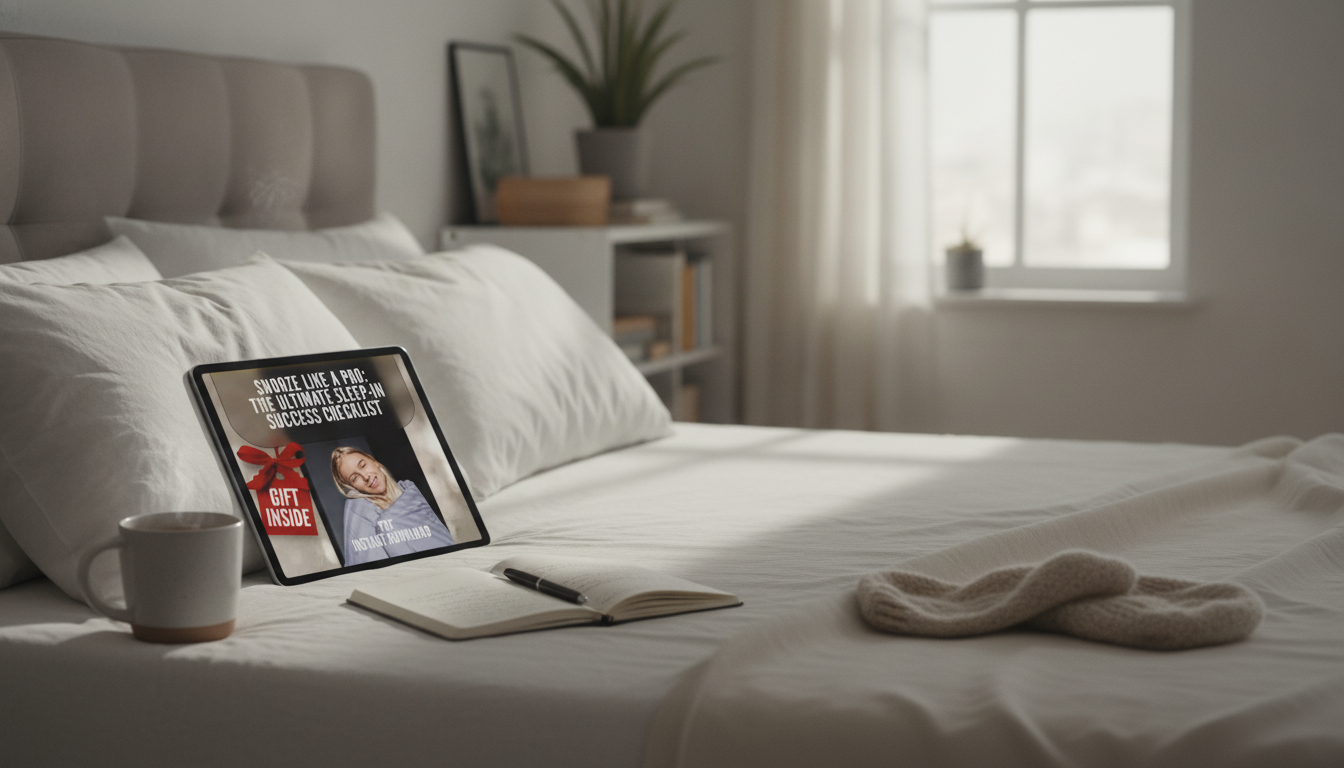
If you want a ready-made version of the routine below, the Snooze Like a Pro: The Ultimate Sleep-In Success Checklist (Digital Download) is designed to be printed or kept on a phone/tablet for quick nightly use.
What “sleeping in successfully” actually means
- Aim for rested, not just later. The win is waking up without rushing and without that heavy “sleep hangover.”
- Protect sleep quality first. Timing, continuity, and your environment often matter more than chasing a perfect hour count.
- Remove morning friction the night before. When keys, clothes, and decisions are already handled, waking feels safer and slower.
- Keep the routine repeatable. A consistent approach helps weekends and recovery days feel good without wrecking the workweek rhythm.
The night-before foundation: a checklist that makes mornings easier
- Set a wake window. Choose a 30–60 minute range rather than an exact minute. It’s easier to follow and reduces “alarm anxiety.”
- Pick a shutdown time. Decide when work, messages, and problem-solving end so bedtime doesn’t drift later and later.
- Run a short pre-sleep sequence. Dim lights, do hygiene, change into comfortable clothes, and do a two-minute tidy.
- Prep tomorrow’s essentials. Outfit, keys, bag, lunch plan, and a simple breakfast idea. If you commute or train early, staging your gear matters.
- Set the room for sleep. Cool temperature, darkness, and minimal noise support natural sleep cues. For a helpful overview of sleep basics and why environment matters, see the CDC’s sleep resources and the Sleep Foundation’s sleep hygiene guide.
For mornings where “grab-and-go” is the stress trigger, consider staging what you’ll carry the next day (especially if you exercise or commute). A compact option like the Lightweight 3L Cycling Backpack for Running, Hiking & Outdoor Sports can keep essentials in one place so you’re not hunting for items at the last second.
Evening routine: wind down without making it complicated
- Keep the wind-down to 10–20 minutes. Long routines can backfire if they feel like a project. Small and consistent beats perfect.
- Swap stimulation for quieter inputs. Late-night work, intense shows, and endless scrolling keep the brain activated. Try calmer music, light reading, stretching, or a warm shower.
- Do a quick “brain dump.” Write what’s looping in your head, then add the first next step for tomorrow. This turns vague worry into a contained plan.
- Watch caffeine and alcohol timing. Both can reduce sleep quality even when falling asleep feels easy. If you’re sensitive, cut caffeine earlier and keep alcohol moderate and earlier in the evening.
- If your mind races in bed, reset gently. Get up briefly for a low-light, calm activity (no bright screens), then return to bed when sleepy.
A practical sleep-in plan for weekends and days off
Stress-proofing your mornings: reduce decisions, reduce rush
Quick Sleep-In Success Checklist (Night Before + Morning)
| Step | What to Do | Why It Helps |
|---|---|---|
| Set a wake window | Choose a 30–60 minute range for waking up | Reduces pressure and makes sleep feel less fragile |
| Pick a shutdown time | Stop work/messages at a set time | Prevents bedtime drift and mental activation |
| Prep essentials | Lay out clothes, pack bag, plan breakfast | Cuts morning decisions and rushing |
| Dim + cool the room | Lower lights and keep the bedroom cool | Supports natural sleep cues and comfort |
| Brain dump list | Write worries + next steps for tomorrow | Lowers rumination at bedtime |
| Gentle alarm plan | Use a gradual alarm or two-stage alarm | Less jarring wake-ups, fewer snooze spirals |
Digital download: a ready-to-use sleep-in checklist
Get the printable routine here: Snooze Like a Pro: The Ultimate Sleep-In Success Checklist (Digital Download).
Common roadblocks and simple fixes
- Can’t fall asleep: Move your wind-down earlier, reduce evening light, and avoid clock-watching. If you need a plain-language refresher on how sleep works, the National Institute of Neurological Disorders and Stroke overview is a solid reference.
- Wake too early: Keep the room dark, don’t check the time, and follow a calm “return-to-sleep” routine (quiet reading under low light, then back to bed when sleepy).
- Sleep in but feel worse: Avoid very long sleep-ins; prioritize consistent bedtime and morning light after waking.
- Nighttime stress: Schedule a short “worry window” earlier in the evening, then write a next-step plan so your brain stops trying to solve everything at midnight.
If your bedroom feels visually busy, consider simplifying what’s within your line of sight from bed. Even one grounded, minimal piece—like the Beige Travertine U-Shape Sculpture – Modern Stone Decor for Home Interiors—can help the space feel calmer and more intentional at night.
FAQ
How can sleeping in feel restful instead of groggy?
Keep the schedule shift small, protect bedtime consistency, and get light soon after you wake. Grogginess often comes from fragmented sleep or waking at an awkward point in your sleep cycle, not from “too much sleep” alone.
What should an evening routine include for better sleep?
A short wind-down, dimmer lights, lower stimulation, a quick brain-dump list, and prepping morning essentials are usually enough. The best routine is the one that feels realistic on normal weeknights.
Is hitting snooze bad if it helps wake up slowly?
Repeated snoozing can fragment sleep and increase grogginess. If you like a slower wake-up, try a gradual alarm, limit yourself to one snooze, and place the alarm farther from the bed.
















Leave a comment