Lightest Mountain Bike Pedals: Clipless vs Flat
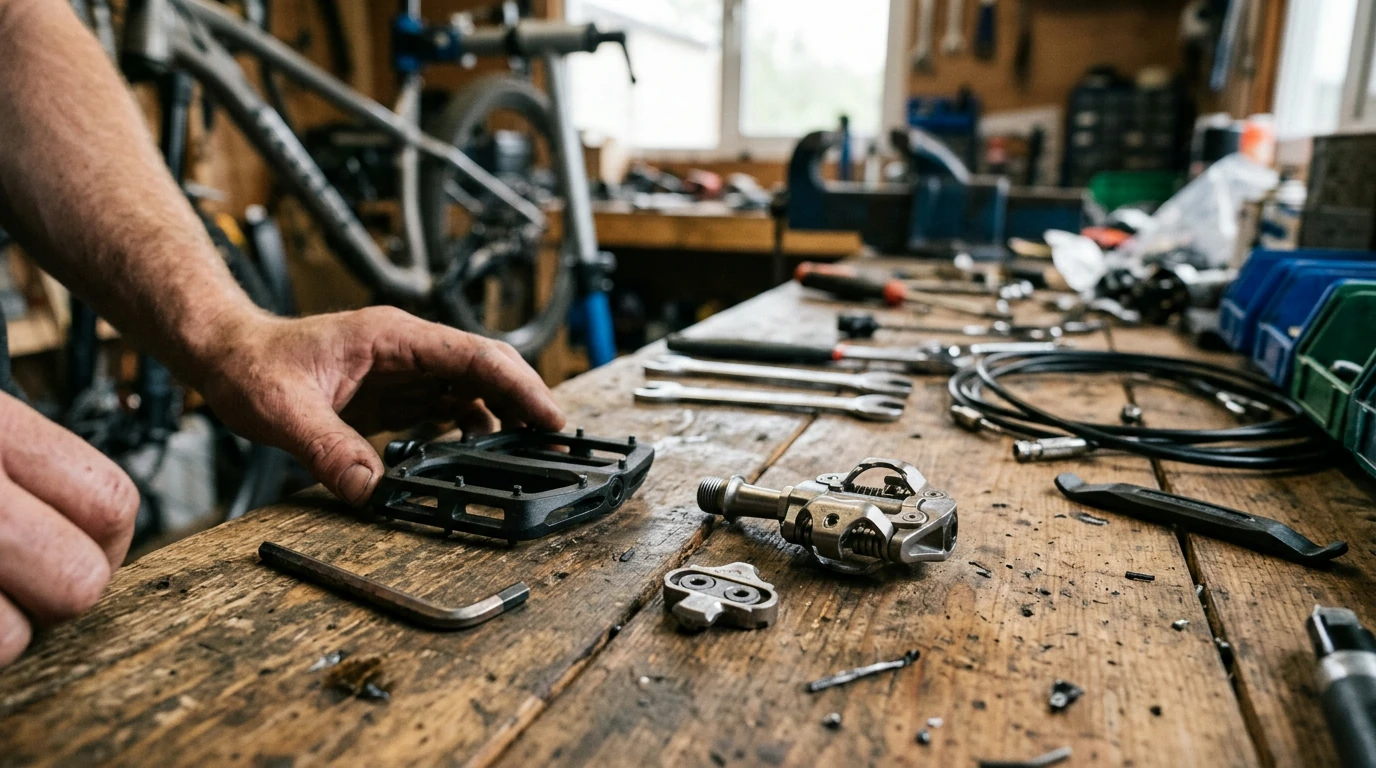
What are the lightest mountain bike pedals?
The lightest mountain bike pedals are typically minimalist clipless models made for cross-country racing. Many weigh roughly 200 to 300 grams per pair, while lightweight flat pedals often fall around 250 to 350 grams per pair. Exact weights vary by model, axle material, platform size, and whether cleats are included.
For most riders, the best choice is not simply the pedal with the lowest number on the scale. You also need enough grip, support, durability, and clearance for the trails you ride. Our team recommends comparing pedals by the weight of the complete pair and choosing a design that matches your shoes and riding style.
Should you choose lightweight clipless or flat pedals?
Clipless pedals for cross-country efficiency
Clipless pedals hold a compatible cleat on your shoe in a spring-loaded mechanism. Their compact bodies can keep weight low and provide a secure connection when you are pedaling over rough ground. They require practice clipping in and releasing, so try them in a safe, open area before taking them onto technical trails.
Check that the pedal system is compatible with your shoe and cleats. If you want more support underfoot, a clipless pedal with a small surrounding platform can be a useful compromise, though it may weigh more than a minimal race pedal.
Flat pedals for easy foot movement
Lightweight flat pedals offer a broad surface and replaceable traction pins without requiring a cleat. They let you put a foot down quickly and adjust your position as you ride. A grippy flat-pedal shoe helps the pins hold securely, especially when the trail gets rough.
Aluminum and composite platforms can both be suitable options. A thinner platform may improve ground clearance, but make sure it still provides enough room and support for your foot.
What matters besides pedal weight?
Look for a strong axle, smooth bearings, and seals suited to the conditions you ride in. Serviceable bearings and replaceable pins can help extend a pedal’s useful life. Aggressive pins improve grip but can scrape your legs, so consider shin protection for technical riding.
For a closer look at lightweight flats and weather-ready features, explore our guide to ultralight sealed-bearing flat bike pedals.
FAQ
How do you maintain mountain bike pedals?
Wipe off mud after rides, inspect the pins and axles, and follow the manufacturer’s bearing service instructions. Avoid directing a high-pressure water stream at the seals.















Leave a comment