The Bright Side Blueprint: A Gentle Positivity Routine

A more positive daily routine doesn’t require you to wake up cheerful or find a silver lining in every challenge. It can be as simple as giving yourself a few moments to pause, notice what you need, and choose a supportive next step.
We created this practical approach around The Bright Side Blueprint, a digital positivity guide for making space for intentional habits. Start small, leave room for difficult feelings, and build a routine that works in your ordinary life—not just on your easiest days.
Make Positivity a Gentle Daily Practice
Positivity is a practice, not a demand to feel upbeat all the time. A brief check-in, a meaningful moment of gratitude, or a few quiet breaths can give you space to reflect without requiring you to judge the whole day as good or bad.
Small actions are often easier to return to than an ambitious routine. You might set an intention while your coffee brews or pause before opening your laptop. Connecting a new habit to something you already do can make it easier to remember.
Some days, you may feel frustrated, sad, or overwhelmed. Those feelings don’t mean you’re doing positivity wrong. Try responding with the same patience you would offer someone you care about: acknowledge what’s hard and choose one manageable action, if you have the capacity.
For more ideas on caring for your well-being, the National Institute of Mental Health’s self-care guidance offers a useful starting point.
Meet The Bright Side Blueprint
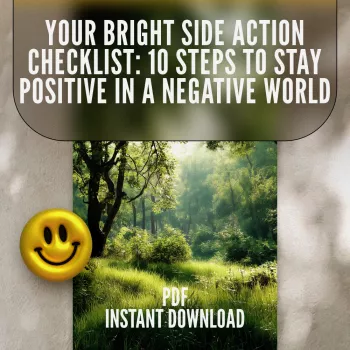
The Bright Side Blueprint is a digital mental wellness eBook with a daily positive routine checklist. It’s listed at $8.99 USD and gives you a self-guided starting point for exploring more intentional daily habits.
A guide can help you decide where to begin, while a checklist gives you a prompt to revisit your intentions. You don’t have to complete every item or use the same approach indefinitely. The aim is to notice what supports you and make those actions easier to repeat.
Create a Routine That Fits Your Day
Rather than changing everything at once, choose one small action for each part of your day. Keep each step brief enough to fit around work, family, errands, or rest. The following table is an example you can adapt; it isn’t a description of the eBook’s specific contents.
| When | Example action | Purpose |
|---|---|---|
| Morning | Name one intention for the day | Start with a clear focus |
| Midday | Pause and notice how you feel | Make room for a mindful reset |
| Evening | Write down one meaningful moment | Reflect without judging the whole day |
Your morning intention might be “take breaks when I can” rather than “get everything done.” At midday, simply naming your mood can be enough. In the evening, a meaningful moment could be a conversation, a meal, or a task you completed despite a difficult day.
Adjust the plan when your energy or schedule changes. On a busy day, you might combine your check-in with a meal; when you’re tired, a single sentence may feel more manageable than writing a full page. The National Institutes of Health’s mindfulness overview also describes ways to bring awareness to everyday moments.
Use a Checklist Without Chasing Perfection
Keep your checklist somewhere accessible, such as on your phone or near a spot where you regularly pause. Treat it as a prompt, not a test. A checked box can remind you of an action you chose; an empty box doesn’t say anything about your worth or effort.
Begin with one or two manageable habits and notice how they feel over time. Does a morning intention help you focus? Does an evening reflection feel supportive, or does another time work better? Keep what’s useful and change what isn’t.
Missed days are normal. You can restart with the smallest available step, whether that’s taking one breath, naming a feeling, or returning to your checklist tomorrow. There’s no need to make up for the days you missed.
Make Room for a Change of Scene
If getting outside is already part of your day, a short walk can be a natural time to check in with yourself. Notice the temperature, the sounds around you, or how your body feels as you move. You can also practice noticing your surroundings indoors; going outside isn’t a requirement.
For a longer outing, our Lightweight 3L Cycling Backpack is another option for carrying essentials. Choose an activity and distance that suit your circumstances, and remember that a supportive routine can be quiet and simple.
Choose Support That Meets Your Needs
Our team sees The Bright Side Blueprint as a self-guided resource for readers interested in intentional habits—not a substitute for professional mental health care. If your feelings are interfering with daily life or you need more support, consider reaching out to a qualified mental health professional.
When you’re ready to begin, explore The Bright Side Blueprint and choose one small practice that feels realistic for you today.
FAQ
What is The Bright Side Blueprint?
The Bright Side Blueprint is a digital positivity guide and mental wellness eBook with a daily positive routine checklist.
Do I need to feel positive every day to use a positivity routine?
No. A supportive routine can make room for difficult feelings and does not require constant optimism.
Can this guide replace mental health care?
No. It is a self-guided wellness resource, not a replacement for professional mental health assessment or treatment.















Leave a comment