Cute Mushroom Cat Scratching Post for Happy Daily Claws
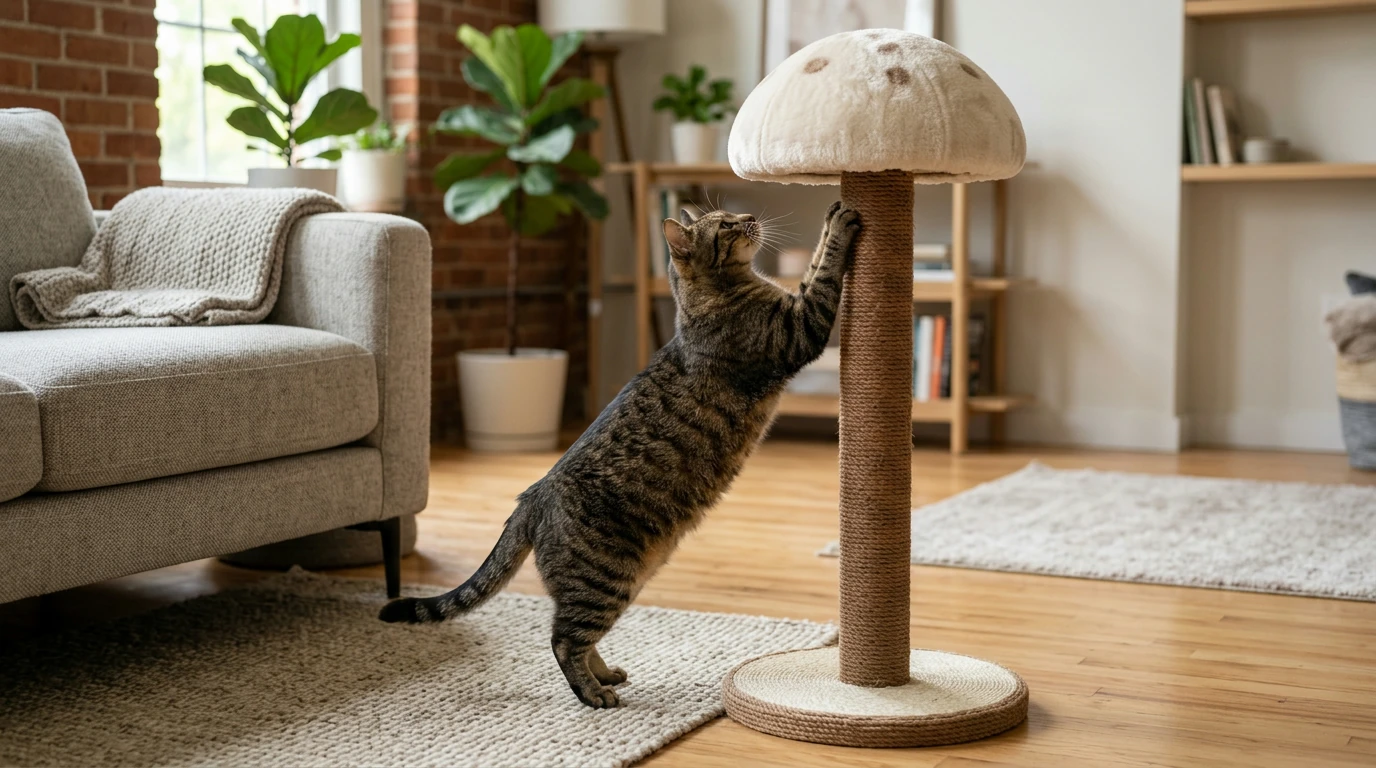
Cute Mushroom Cat Scratching Post: A Playful Upgrade for Daily Claws & Cozy Corners
Cats scratch to stretch, mark territory, and keep claws in good shape—so the goal isn’t to stop the behavior, it’s to give it a better destination. Our Cute Mushroom Cat Scratching Post brings a whimsical, decor-friendly shape into the routine, turning everyday scratching into a dedicated spot that helps protect sofas, rugs, and doorframes while giving cats a satisfying place to reach, reset, and “claim” a corner.
Why scratching isn’t “bad behavior” (and why a dedicated post matters)
Scratching is normal cat communication and body maintenance, rolled into one daily habit. When you provide a clear “yes” zone, you’re not just saving furniture—you’re making your cat’s environment feel more complete.
- Scratching supports natural claw maintenance by helping shed the outer nail sheath.
- It’s a full-body stretch that engages shoulders and back—especially valuable for indoor cats.
- Scent and visual marking are part of normal cat behavior; a post gives that instinct a consistent, home-friendly target.
- Adding a scratching station early (or reintroducing it during transitions like a move) reduces furniture-targeting over time.
If you’re ever tempted to “solve” scratching by removing the behavior entirely, the American Veterinary Medical Association (AVMA) and the ASPCA both explain why scratching is a natural need and why environment-based solutions (like scratchers, placement, and training) are the better path for most homes.
What makes the mushroom shape a smart everyday choice
Scratchers only work when they’re actually used—and cats often prefer to scratch where you spend time. A cute, playful silhouette makes it easier for you to keep the scratching station in the “real” living space instead of hiding it in a back room.
- A cute shape can be easier to place in open areas—cats often scratch where family activity happens.
- A themed post can double as a fun accent piece, so it’s more likely to stay out where your cat will use it.
- A dedicated, clearly “cat-owned” object helps redirect attention away from textured furniture that feels scratch-worthy.
If you’re building a cohesive corner, our team also likes pairing functional pet zones with a small decor anchor—something like our Beige Travertine U-Shape Sculpture on a nearby shelf or console can help the cat area feel intentional instead of temporary.
Where to place it for the best chance of daily use
Placement is the difference between “ignored” and “obsessed.” Start where your cat already has a habit, then expand from there.
- Put it near the current problem spot first (so your cat’s habit has an easy alternative).
- Place one scratching option close to where your cat wakes up; many cats scratch right after naps.
- Choose a social location (living room edge, hallway corner) rather than a hidden area—many cats scratch to communicate presence.
- Keep it stable and accessible: avoid tight gaps where whiskers brush walls, and give enough space to approach from more than one direction.
How to encourage your cat to choose the post (without battles)
You don’t need a power struggle—just a simple reward loop that makes the post the “easy win.” Keep your responses calm and consistent for a week or two.
- Reward immediately after your cat scratches the right place (praise, a treat, or a quick play burst).
- Try a pinch of catnip or a catnip spray (if your cat responds to it) to build positive association.
- Use play to guide interest: drag a wand toy past the post so paws land on it naturally.
- If your cat scratches furniture, calmly interrupt and move attention to the post—then reward the moment the post is used.
- Trim claws regularly to reduce snagging on upholstery and keep scratching comfortable and effective.
Choosing the right scratching setup for your home (quick fit guide)
The best scratching setup matches your cat’s preferences and your home’s layout. Watch what your cat targets now (height, texture, location), then replicate those “wins” in a dedicated scratch zone.
| Cat habit to watch | What to provide | Placement tip | How the mushroom post can help |
|---|---|---|---|
| Scratches sofa arms | A dedicated post nearby | Place within a few steps of the sofa | Creates a clear alternative in the same high-value zone |
| Scratches right after naps | An easy-access scratch spot | Near sleeping areas or a favorite sun patch | Becomes part of the wake-up stretch routine |
| Scratches doorframes/edges | A visible, “claimed” scratch station | In hallways or entry routes | Gives marking behavior a home-friendly target |
| Multi-cat tension over resources | Multiple stations or spread-out options | One per main area | Adds another “owned” spot to reduce competition |
Keeping the scratching zone tidy (and your cat coming back)
A cute, giftable piece for cat homes (that still earns its spot)
FAQ
How long does it take a cat to start using a new scratching post?
Many cats try a new post within a few days, but it can take a couple of weeks for it to become a true habit. Place it next to the current scratching spot and reward immediately after your cat uses it to speed up the switch.
Where should a scratching post go to prevent couch scratching?
Put the post within a few steps of the couch—close enough that it feels like a direct alternative, not a separate “area.” A second scratching option near your cat’s favorite sleep spot can also catch those automatic post-nap scratches.
What if my cat ignores the scratching post?
Move it to a more social, visible location and try catnip or play to create interest. If your cat has a strong texture preference, adding a second scratcher with a different feel nearby often helps.













Leave a comment