5-in-1 Wooden Pikler Triangle Set: Safe Indoor Climbing
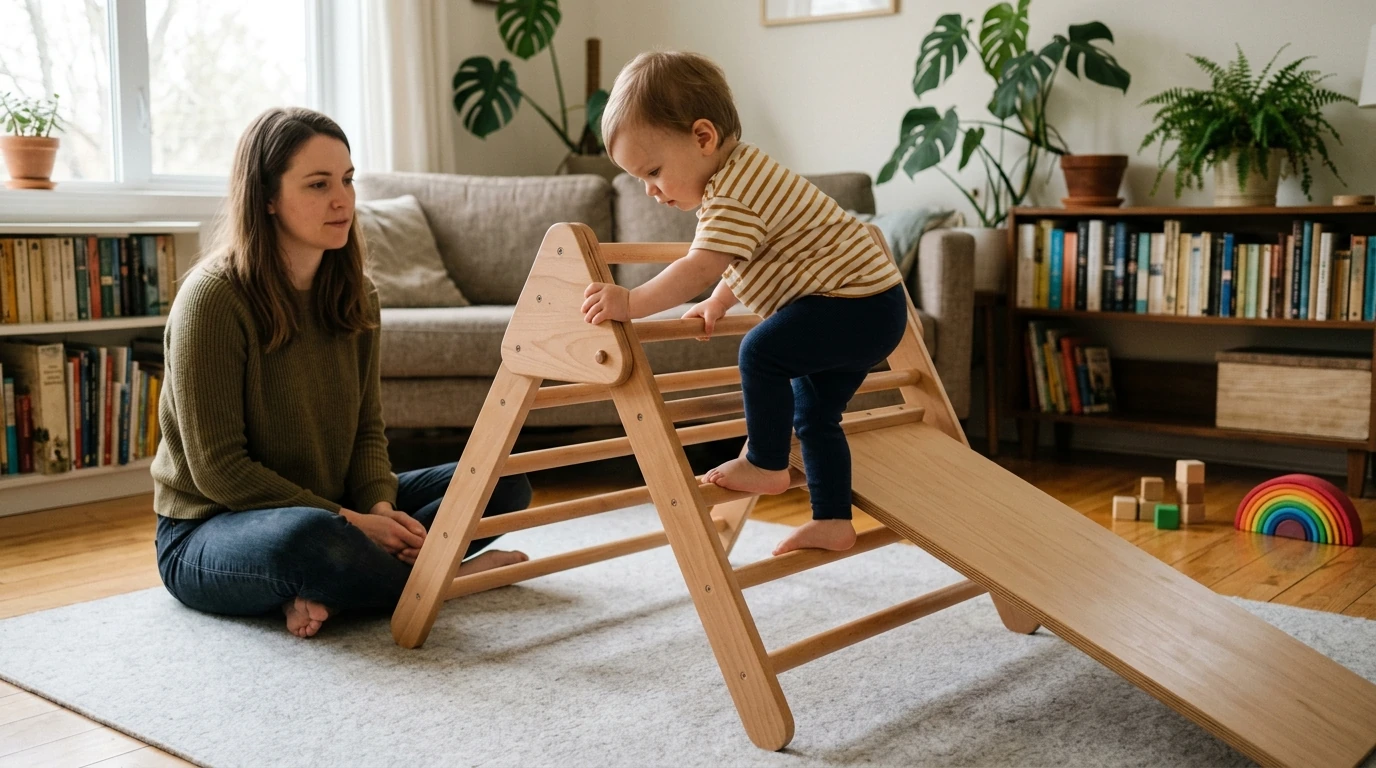
5-in-1 Wooden Pikler Triangle Climbing Set for Toddlers: Indoor Movement, Balance, and Confident Play
Toddlers learn through movement—pulling up, stepping over, climbing, sliding, and trying again. An indoor wooden Pikler triangle climbing set creates a simple, always-ready space for that kind of practice at home, especially on busy days when outdoor play is limited. Our 5-in-1 set is designed to support active play that feels natural, open-ended, and easy to fit into everyday routines.
Movement play also lines up with common toddler developmental leaps (like climbing, running, and kicking a ball). If you like checking skills by age, the CDC’s 2-year milestones are a helpful reference point, and the American Academy of Pediatrics’ guidance on play reinforces why daily play matters for learning and connection.
Why a Pikler-style climbing set belongs in a toddler’s daily play
- It encourages gross-motor skill building through repetitive, self-directed movement (climb up, turn around, climb down).
- It supports balance and coordination as your toddler experiments with foot placement, handholds, and shifting weight.
- It promotes confidence by letting children choose their own challenge level—and pause when they need to.
- It creates a predictable “yes space” for active play indoors—useful for mornings, nap transitions, or weather-heavy weeks.
- Its open-ended structure keeps play fresh: today it’s a mountain, tomorrow it’s a fort entry or a reading nook backdrop.
What “5-in-1” can look like in everyday play
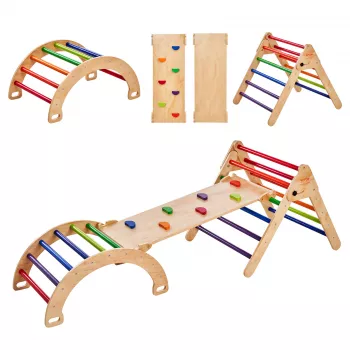
One of the biggest advantages of a multi-use climbing set is variety without clutter. Instead of needing separate pieces for climbing, sliding, and bridging, you can adjust the same core components as your toddler’s skills grow.
- Multiple configurations invite variety without needing lots of separate toys—setups can be adjusted as skills grow.
- A triangle frame typically supports climbing practice from different angles (more upright vs. more gentle).
- A ramp/board component often works as a slide, incline, or bridge between structures depending on placement.
- Changing the layout resets the challenge without increasing speed or height—helpful for cautious climbers.
- Short play cycles work well: 10–20 minutes of active movement can be enough before switching to calmer activities.
Quick setup guide: making a safe, toddler-ready play zone
- Choose a flat area with open clearance around the set so your child can step off safely without bumping furniture.
- Add a soft play mat or folded rug nearby for comfort during kneeling, crawling, and sitting breaks.
- Start with the gentlest configuration first; raise difficulty gradually as your toddler shows steady control.
- Keep the space consistent for a few days so toddlers can repeat the same movement pattern and refine it.
- Use simple safety rules: bare feet or grippy socks, one child at a time, and hands on the structure while climbing.
Common Home Setups and What They Encourage
| Setup | Best for | Simple ways to use it |
|---|---|---|
| Triangle only (low challenge) | First-time climbers, cautious toddlers | Climb two rungs up, pause, climb down; practice turning around safely |
| Triangle + ramp as a gentle incline | Coordination and leg strength | Walk up/down with hands; crawl up, slide down seated with supervision |
| Triangle + ramp as a bridge | Balance and planning steps | Step across slowly; place a toy at the end as a goal |
| Repositioned layout for a new route | Confidence through novelty | Create a “loop”: up one side, down another, repeat |
How this set supports skill-building as toddlers grow
- Early stage: pulling up, stepping onto the first rung, and learning how to climb down backward with control.
- Middle stage: alternating feet, reaching higher rungs, and pausing to shift direction safely.
- Later stage: smoother transitions between triangle and ramp, plus imaginative play that uses the structure as a prop.
- Pair active play with calm play: climbing time followed by books, blocks, or puzzles helps balance energy and focus.
- Keep challenges “just right”: if your child rushes or jumps off, reduce complexity; if they look bored, slightly adjust the route.
Room-by-room ideas for real homes
Choosing the right climbing set: what matters most for toddlers
Product picks from our team
- 5-in-1 Wooden Pikler Triangle Climbing Set for Toddlers — a flexible indoor climbing set designed for toddler movement play, with multiple ways to adjust the challenge level.
- Lightweight 3L Cycling Backpack for Running, Hiking & Outdoor Sports — an easy grab-and-go option when you’re mixing indoor movement days with short outdoor walks or playground time.
- Beige Travertine U-Shape Sculpture – Modern Stone Decor for Home Interiors — a simple decor piece if you’re refreshing a playroom or family space and want a clean, modern look that doesn’t feel “toy cluttered.”
FAQ
What age is an indoor wooden Pikler triangle climbing set best for?
It’s typically a great fit from the toddler stage through early preschool years, especially once your child is pulling up confidently and showing interest in climbing. The key is matching the configuration to readiness—start low and gentle, then adjust as control and coordination improve.
How can a Pikler triangle be used safely indoors?
Set it on flat flooring with open clearance, add a soft mat or rug nearby, and keep adult supervision close—especially when you introduce a new layout. We also recommend simple house rules like one child at a time and starting with the easiest setup before increasing the challenge.
How do you keep toddlers interested in a climbing set over time?
Make small changes instead of big overhauls: shift the ramp angle, create a “bridge,” or place a toy goal at the end to invite repeat attempts. Short daily sessions and a weekly rotation of setups usually keeps play fresh without needing to add more equipment.














Leave a comment