Commercial Food Warmer Display: Hot, Visible, Ready Sales
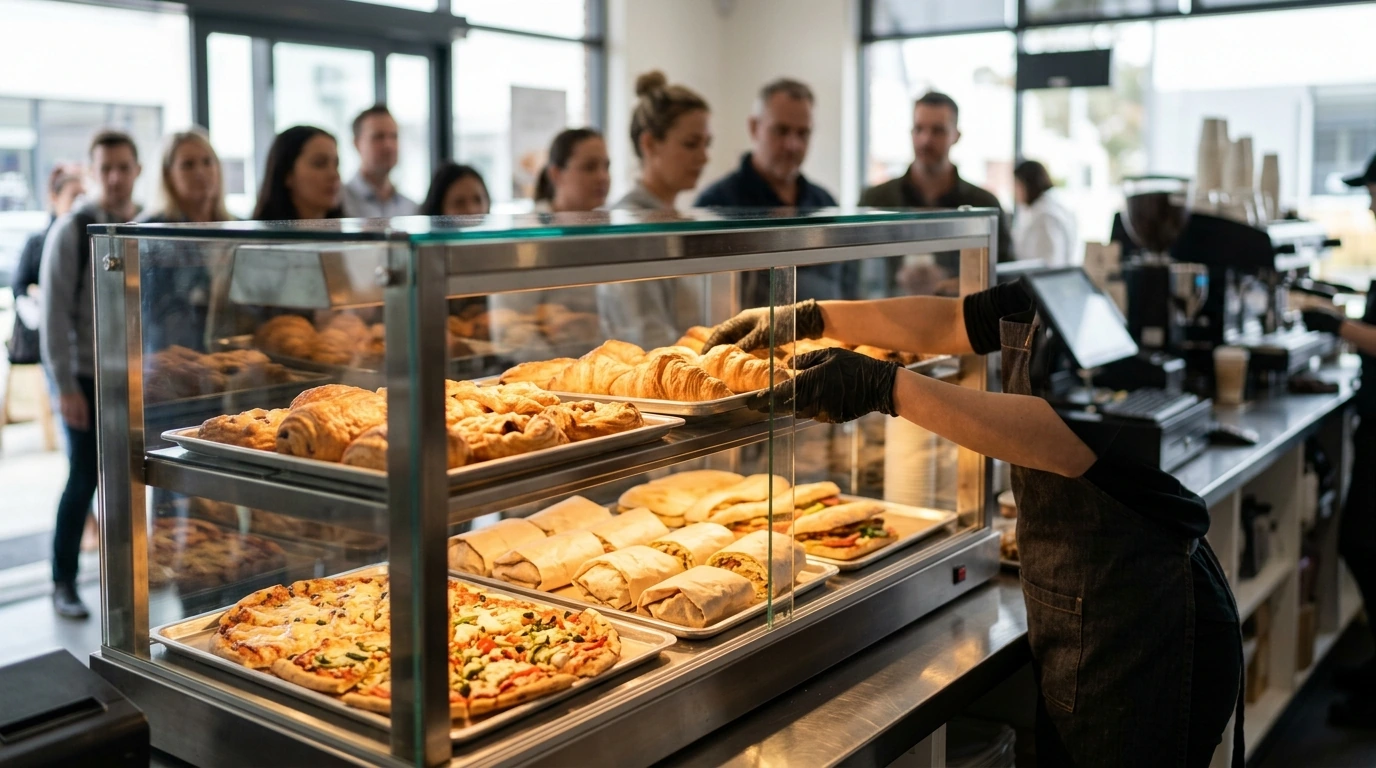
Commercial Food Warmer Display for Hot, Ready-to-Serve Merchandising
A commercial food warmer display keeps prepared items hot while presenting them clearly for fast, self-serve, or counter-service sales. The right unit balances holding temperature, visibility, access, and easy cleaning so food stays appetizing during peak hours without drying out or overcooking. When it’s set up and operated correctly, a display warmer can reduce remakes, tighten service times, and keep your front counter looking stocked and inviting.
What a food warmer display is designed to do
- Hold cooked foods in the safe hot-holding range while maintaining texture and appearance.
- Improve grab-and-go or counter ordering by showcasing items behind heat-retaining glass.
- Reduce waste by stabilizing temperature during rushes and slow periods.
- Support consistent portioning and rotation with trays/shelves that keep items organized.
Food safety guidance typically emphasizes keeping hot foods out of the “danger zone,” and many codes reference holding hot foods at 135°F or above—always confirm your local requirements and product-specific procedures. For background, see the USDA’s overview of safe temperature ranges (USDA FSIS Danger Zone) and the FDA Food Code.
Where it fits best in foodservice
- Convenience stores and delis: hot snacks, pastries, breakfast items, pizza slices, burritos.
- Cafés and bakeries: warm croissants, cookies, pretzels, and savory pastries where visibility drives add-on sales.
- Concessions and kiosks: compact footprint for limited counter space with quick customer access.
- Catering lines and buffets: front-of-house holding before service, with controlled access for staff.
In each setting, the goal is the same: keep food hot and appealing while making it effortless to restock, rotate, and serve—without interrupting checkout flow.
Key performance factors to evaluate
- Temperature consistency: stable heat across shelves/trays to avoid hot spots and lukewarm corners.
- Humidity control: reduces drying for foods that need moisture; drier holding can benefit crisp items when venting is possible.
- Recovery time: how quickly the unit returns to set temperature after doors open frequently.
- Airflow and circulation: even heat distribution helps maintain quality across different product positions.
- Visibility: clear panels and interior lighting help items sell; glare reduction matters under bright store lights.
| Factor | Why it matters | What to look for |
|---|---|---|
| Hot-holding stability | Protects quality and safety | Reliable thermostat, even heat, clear temperature controls |
| Capacity & layout | Matches sales volume | Shelf count, tray spacing, usable interior height |
| Access | Speeds service and restocking | Front/back doors, wide opening, ergonomic handle placement |
| Cleaning | Reduces downtime and contamination risk | Removable trays, smooth corners, wipeable surfaces |
| Power & efficiency | Controls operating cost | Appropriate wattage, insulation, smart cycling or stable hold |
| Build quality | Durability in daily use | Sturdy frame, quality seals/hinges, heat-resistant materials |
Choosing the right size and configuration
- Start with a realistic peak-hour plan: estimate how many portions need to be held hot at once, plus space for rotation.
- Match shelf spacing to product height: avoid crushing items and allow airflow around trays.
- Decide on service style: customer self-serve may favor easy front access; staff-serve often benefits from rear access for restocking.
- Confirm counter depth and clearance: doors should open fully without blocking aisles or POS equipment.
Capacity is not only “how much fits,” but how well it fits. A unit that forces you to stack products or cram trays can undermine texture and create uneven temperatures across the cabinet.
Heat management and food quality
- Use separate holding strategies for different foods: items that dry out quickly benefit from humidity; crisp foods may need less moisture and shorter hold times.
- Avoid stacking or overcrowding: trapped steam reduces circulation and can cause sogginess or uneven warmth.
- Rotate with time labels: first-in-first-out supports freshness and consistent texture.
- Verify temperatures with a calibrated thermometer: don’t rely solely on the unit’s dial or display.
If your menu includes a mix (for example, pizza slices plus pastries), plan your shelf map: place more moisture-tolerant items in warmer zones and more delicate items where airflow is gentler. For broader food safety resources and best practices, the CDC’s food safety hub is a helpful reference point (CDC Food Safety).
Materials, cleaning, and daily workflow
- Prioritize smooth, wipeable surfaces: fewer seams and tight corners means faster cleanup.
- Look closely at door seals and hinges: tight seals improve heat retention; robust hinges stand up to constant opening.
- Plan a daily routine: empty, power down safely, remove trays, wash/sanitize, wipe interior, and reassemble once fully dry.
- Keep vents and intakes clear: crumbs and grease can restrict airflow and contribute to overheating or slow recovery.
Cleaning speed matters during real service. Removable shelves and pans can turn a frustrating shutdown into a predictable close-out task that staff can complete consistently.
Installation and operating tips that prevent common problems
Maintenance and troubleshooting basics
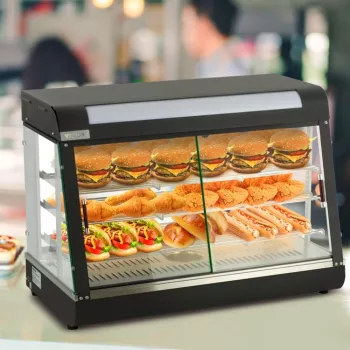
A reliable option to stock your counter
- Lightweight 3L Cycling Backpack for Running, Hiking & Outdoor Sports
- Beige Travertine U-Shape Sculpture – Modern Stone Decor for Home Interiors
FAQ
What temperature should a food warmer display hold?
Hot-holding requirements commonly reference keeping food at 135°F (57°C) or above, but you should follow local regulations and your operation’s food safety plan. Always verify actual product temperatures with a calibrated food thermometer rather than relying only on the unit’s display.
How long can food stay in a heated display without losing quality?
Quality time limits vary by food type, humidity, and airflow: delicate items typically need shorter hold times than dense, moisture-retaining foods. Use time labels, rotate frequently, and avoid overfilling so heat circulates and texture stays consistent.
How often should a commercial warmer display be cleaned?
Clean food-contact surfaces daily, including trays, racks, and any crumb/grease catch areas, and follow your local sanitation rules. Schedule periodic deeper checks for door seals, vents, and hinges according to the manufacturer’s instructions.













Leave a comment