Reversible Pre-Seasoned Cast Iron Griddle for BBQ
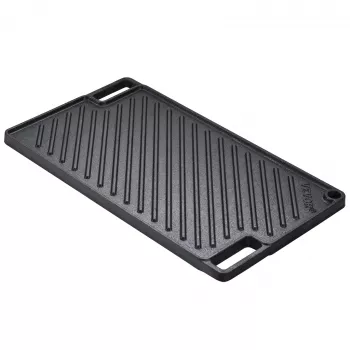
Reversible Pre-Seasoned Cast Iron Griddle for BBQ, Stovetop, and Oven Cooking
A reversible cast iron griddle adds a broad, heat-stable cooking surface that works across grills, burners, and ovens. With a pre-seasoned, naturally slick finish and two usable sides, it’s built for searing, sautéing, toasting, and breakfast-style cooking—while keeping heat consistent for better browning and fewer hot spots.
What Makes a Reversible Cast Iron Griddle Useful
The biggest advantage is flexibility. A reversible design gives you two cooking faces in one piece of cookware, so you can switch approaches without switching pans. One side typically feels more “open” for general griddling, while the other can be better suited to foods that benefit from a slightly different surface feel or edge profile.
Cast iron’s heat retention is the other major win. Once preheated, it resists temperature dips when you add cold food, helping pancakes brown evenly, tortillas blister properly, and burgers develop a more consistent crust. Because it holds heat so well, it can also act like a space-saving stand-in for multiple pans when feeding a group—especially for breakfast spreads or grill-side batch cooking.
Finally, pre-seasoning gives you a head start. The initial seasoning helps reduce sticking early on, and it typically gets better with regular cooking and proper drying/oiling habits.
Key Features to Look For
- Pre-seasoned finish: Helps reduce sticking from the first uses and supports better release over time as seasoning layers build.
- Reversible build: Expands cooking options without adding extra cookware to store.
- Cast iron thickness: Supports stable temperatures for searing and consistent griddle performance.
- Compatibility: Check fit across grill grates, gas/electric burners, and oven racks before first use.
- Handling considerations: Cast iron gets hot and stays hot—use heat-resistant gloves and allow cooling time before moving or cleaning.
Best Ways to Use It for BBQ and Outdoor Cooking
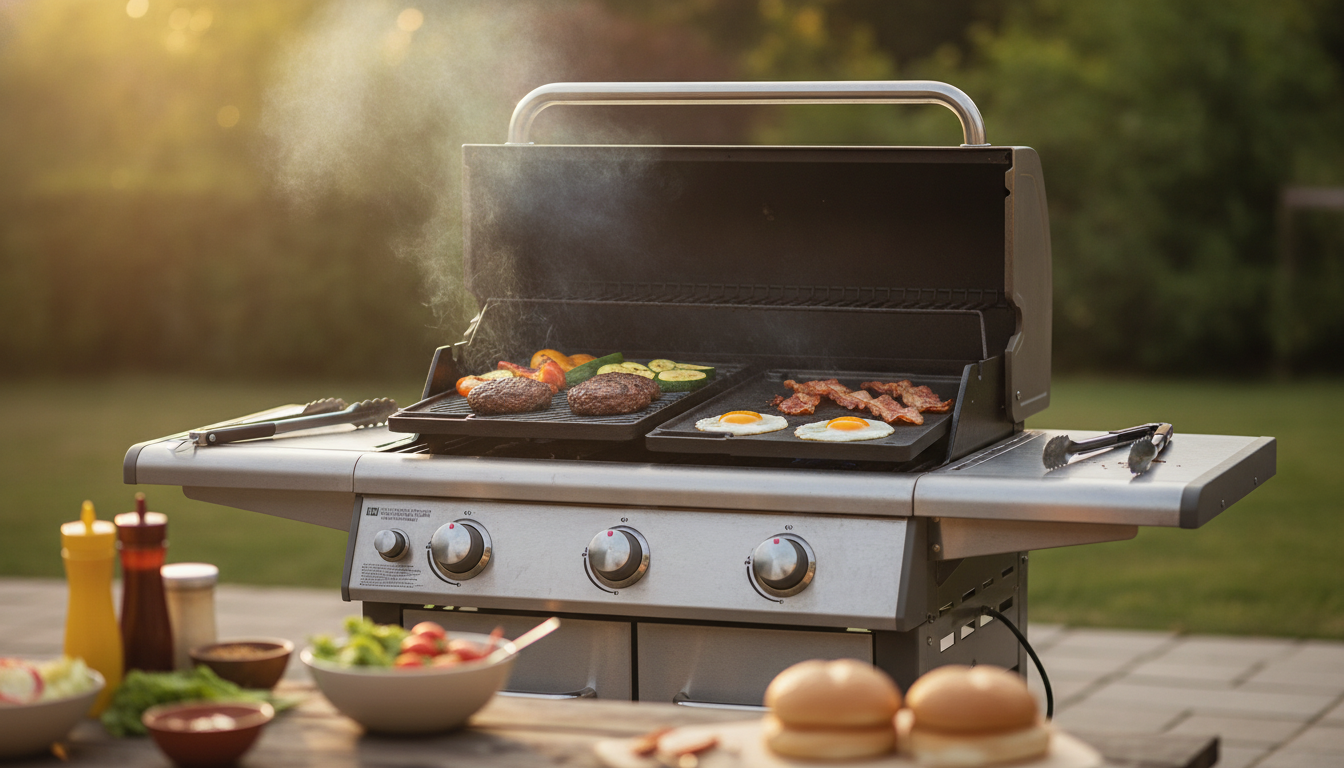
On a grill, the goal is steady heat and predictable browning. Bring cast iron up to temperature gradually—especially if it’s been sitting in a cool garage or you’re cooking in colder weather. Slow preheating helps avoid thermal shock and gives the entire slab time to even out.
- Preheat with intention: Start over medium heat and allow several minutes for the griddle to heat through before going hotter.
- Oil lightly, not heavily: A thin wipe of a high-smoke-point oil (canola, grapeseed, avocado) improves release for eggs, fish, or tortillas and helps protect seasoning.
- Smash burgers: Preheat until a drop of water sizzles and evaporates quickly. Press patties briefly, then let the crust form undisturbed before flipping.
- Vegetables: Toss with oil and salt, spread in a single layer, and resist constant stirring to encourage browning.
- Flare-up control: If grease flares, slide the griddle toward an indirect zone. Cast iron retains enough heat to keep cooking even away from the hottest burners.
For food safety, cook proteins to safe minimum internal temperatures and use a thermometer when possible. The USDA’s reference chart is a helpful baseline: USDA Food Safety and Inspection Service — Safe Minimum Internal Temperature Chart.
Stovetop and Oven Cooking Ideas
A reversible cast iron griddle also shines indoors, where the extra surface area makes it easy to cook multiple items at once. For breakfast, it can handle pancakes, bacon, hash browns, and toast-ready tortillas without juggling pans. For weeknights, it works well for fajitas, grilled sandwiches, quesadillas, and seared chicken cutlets.
Seasoning, Cleaning, and Non-Stick Performance Over Time
For deeper care guidance and best practices, this reference is widely used: Lodge Cast Iron — Seasoning & Care.
Quick Comparison: Cast Iron Griddle vs Other Common Surfaces
| Surface Type | Heat Retention | High-Heat Searing | Ease of Cleaning | Notes |
|---|---|---|---|---|
| Cast iron griddle | High | Excellent | Moderate | Seasoning improves release over time; heavy but very stable. |
| Nonstick-coated pan | Low–Medium | Limited | Easy | Great for delicate foods; coating can degrade under high heat. |
| Stainless steel pan | Medium | Very good | Moderate | Best with preheating and oil; fond forms for sauces. |
| Carbon steel griddle/pan | Medium–High | Excellent | Moderate | Seasoning similar to cast iron; often lighter and more responsive. |
Product Snapshot
If you want an all-purpose griddle surface that transitions from grill to stovetop to oven, the Reversible Pre-Seasoned Cast Iron Griddle with Non-Stick Surface for BBQ and Cooking is an in-stock option built for daily cooking and weekend cookouts. The pre-seasoned finish helps with early release, and the reversible layout supports everything from pancakes and quesadillas to smash burgers and seared vegetables.
For tailgates, campground meals, or day trips where you’re carrying cooking essentials, a compact pack can help keep tools organized alongside your griddle setup. The Lightweight 3L Cycling Backpack for Running, Hiking & Outdoor Sports is an in-stock option that works well for small accessories like gloves, a thermometer, and seasoning oil when you’re cooking away from the kitchen.
FAQ
Does a pre-seasoned cast iron griddle still need seasoning?
Yes. Pre-seasoning helps right out of the box, but additional thin layers of oil and regular cooking build a stronger, smoother surface over time. To refresh, wipe on a very thin film of oil, heat until it barely starts to smoke, then let it cool.
Can a reversible cast iron griddle be used on a gas grill and a stovetop?
Yes, as long as it fits securely and is well-supported on the grates or burners. Preheat gradually, keep it stable while cooking, and use heat-resistant gloves since cast iron stays hot longer. Avoid sudden temperature changes to reduce the risk of thermal shock.
How should it be cleaned without ruining the non-stick-like finish?
Scrape or brush it while warm, rinse with hot water, and dry immediately. A small amount of mild soap is okay if needed, but avoid soaking and never use a dishwasher. Finish with a light wipe of oil to help protect against rust.















Leave a comment