Are Leather Boots Truly Waterproof? What It Takes
Can leather boots be fully waterproof?
Answer
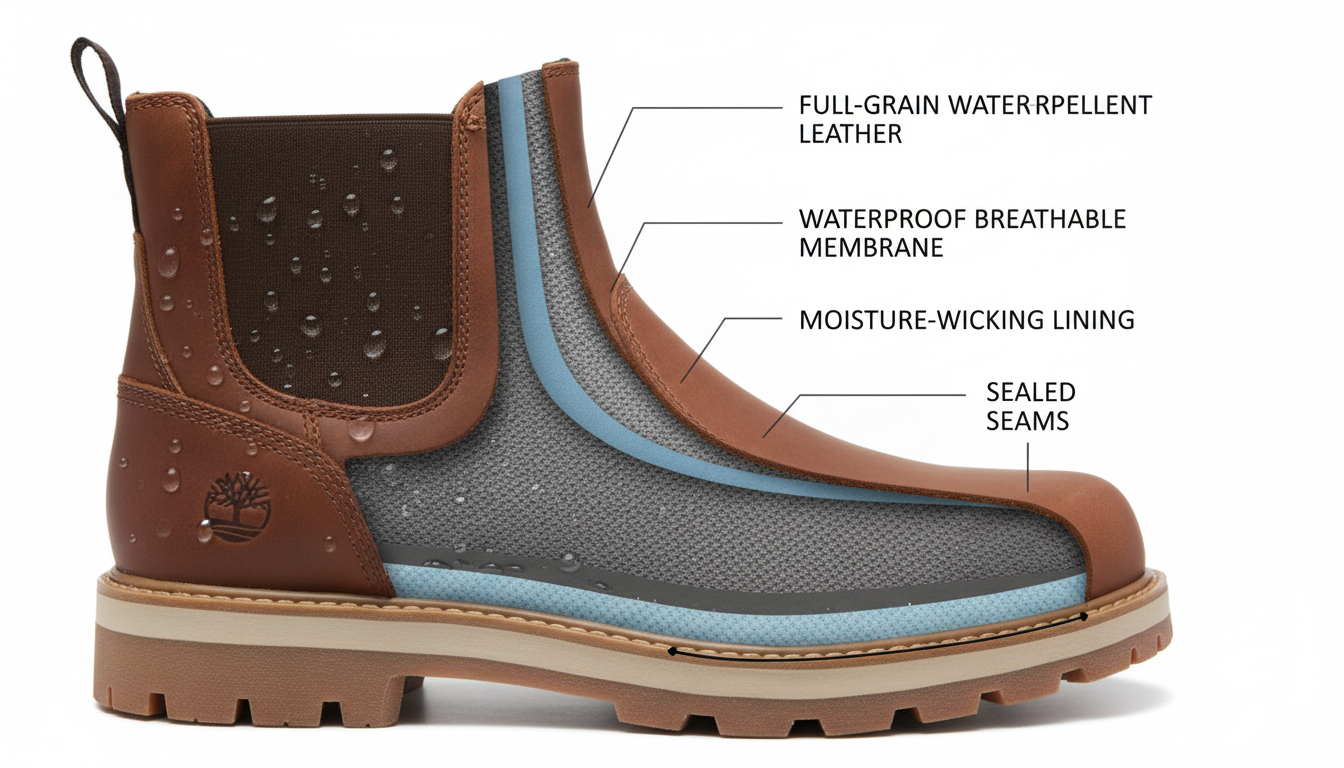
Leather boots can be highly water-resistant, but “fully waterproof” usually requires more than leather alone. Standard full-grain or nubuck leather naturally repels some moisture, yet it can still absorb water through the leather fibers, seams, stitching holes, and around the tongue and eyelets—especially during long exposure, puddles, or heavy rain.
For a boot to be considered truly waterproof in real-world use, it typically needs a built-in waterproof membrane (such as a bootie construction inside the upper), sealed seams, and a gusseted tongue that blocks water from entering through the lace area. Without those features, even thick leather can eventually wet out, leaving feet damp and the boot heavier.
What “waterproof leather” actually means
Many brands describe treated leather as “waterproof,” but that often refers to a durable water-repellent finish that slows absorption. It performs well for splashes and brief contact, yet it’s not the same as a fully sealed system. Once the surface treatment wears off, the leather’s resistance drops unless it’s reconditioned and re-treated.
How to get the most water protection from leather boots
If a pair isn’t membrane-waterproof, the goal is to boost resistance and minimize entry points. Start with a suitable protectant (spray or wax, depending on the leather type), then focus on the seams and flex points where water tends to push through. Reapply after heavy wear, and clean off salt and grime that can dry out leather and reduce repellency.
Also consider how the boot fits and laces. A properly snug fit reduces gaps that let water in around the tongue, and a higher gusseted tongue offers more protection when stepping through shallow water. For a deeper dive on leather boot materials, care routines, and performance details, see this guide to Timberland men’s leather boots fit, care, and traction.
FAQ
How do you waterproof leather boots without damaging them?
Use a product matched to the leather: sprays for suede/nubuck and waxes or creams for smooth leather. Clean and dry the boots first, apply light even coats, and let them fully cure before wear.













Leave a comment